Investor Summary
Fund Strategy
FUND PERFORMANCE AS OF 31st December 2025
| ANNUALIZED SINCE INCEPTION | QUARTERLY | YTD |
|---|---|---|
| - | 0.3% | 8% |
| 2025 |
|---|
| 8.0% |
| ANNUALIZED SINCE INCEPTION | QUARTERLY | YTD |
|---|---|---|
| - | 0.3% | 8% |
| 2025 |
|---|
| 8.0% |
Diameter Master Fund returned +0.3% net in Q4 2025 (+8.0% YTD) with 45% average net exposure. The quarter was dominated by AI infrastructure investments, including profitable positions in Meta's Beignet data center financing and xAI debt, as AI-related issuance reached $90 billion. However, significant losses in distressed investments, particularly the fraudulent First Brands auto parts company and Eye Care Partners, offset gains. The fund lost 123 bps from First Brands alone after the company collapsed despite initial successful short positioning. EchoStar remained the best performer as its spectrum assets gained value for AI applications. Looking ahead, the manager expects continued massive AI capital needs with OpenAI requiring ~$600 billion through 2029. The fund sees opportunities in capital solutions for PE-backed companies facing refinancing challenges and remains cautious on consumer-facing sectors given low-income wage pressure. Key risks include AI technology dispersion, Chinese chemical overcapacity, and asset-backed finance credit expansion. The manager emphasizes improved discipline in distressed underwriting after costly lessons in management assessment.
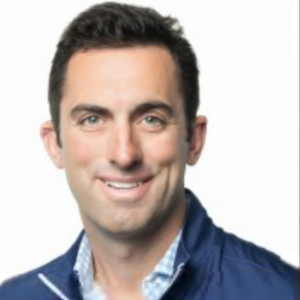
Diameter Capital Partners focuses on complex credit situations across AI infrastructure financing, distressed debt, and capital solutions for overleveraged companies, seeking to capitalize on market dislocations and structural changes.
The manager expects 2026 to bring continued AI infrastructure investment opportunities alongside increased dispersion between winners and losers. Capital solutions for stressed PE companies should provide attractive risk-adjusted returns. The consumer faces mixed dynamics with wealthy Americans having room to spend while low-income segments struggle.
| Date | Letter | Tickers | Keywords | Pitches | Quick Takes |
|---|---|---|---|---|---|
| Jan 8 2026 | 2025 Q4 | AEP, AFRM, AMZN, DIGI, GOOGL, META, MSFT, NFLX, NI, NVDA, ORCL, PARA, PGY, PPL, SATS, SOFI, T, TALEN, UPST, WBD | AI, credit, distressed, energy, Fraud, healthcare, technology |
ORCL SATS NVDA |
Diameter delivered modest Q4 returns despite strong AI infrastructure investments, with Meta's Beignet financing and EchoStar spectrum plays offsetting major distressed losses from fraudulent First Brands. The fund positions for continued AI capital deployment while seeking capital solutions opportunities for stressed PE companies, maintaining caution on consumer exposure amid low-income wage pressures. |
| QUARTER | THEMES | TAGS |
|---|---|---|
| 2025 Q4 |
AIManager believes market's assessment of AI risk differs from their own, with approximately 60% of underperformance attributed to positions where AI impact concerns drove stock declines. Portfolio companies deemed AI-losers declined 15% despite 10% revenue growth and 15% EPS growth, representing valuation compression rather than fundamental deterioration. |
Artificial Intelligence Disruption Valuation Technology Software |
QualityFund exclusively invests in businesses with superior characteristics including high barriers to entry, sustainable competitive advantages, and durable growth prospects. Manager emphasizes that Earnings Quality factor performance was in 100th percentile, demonstrating the portfolio's high-quality nature despite recent underperformance. |
Earnings Quality Competitive Advantages Margins Returns | |
Small CapsStrategy of owning competitively advantaged small and medium-sized businesses remained out of favor for most of the quarter. Fund focuses on businesses that were small-cap at time of purchase and have grown through stock appreciation, with weighted average holding period of 18.6 years. |
Small Cap Growth Russell 2000 Outperformance Long Term | |
ValueManager believes portfolio valuation is particularly compelling given significant divergence between consistent earnings growth and recent performance. Portfolio's aggregate valuation contracted by 26% despite 12% earnings growth and higher margins, cash flow, and returns on capital versus historical composition. |
Valuation Earnings Growth Mispriced Compression |
| Date | Pitch Type | Author | Ticker | Company | Industry | Sub Industry | Bull / Bear | Exchange | Keywords | Action |
|---|---|---|---|---|---|---|---|---|---|---|
| Jan 8, 2026 | Fund Letters | Scott Goodwin | ORCL | Oracle Corporation | Information Technology | Application Software | Bull | New York Stock Exchange | cloud, Database, Financing, infrastructure, Issuance | Login |
| Jan 8, 2026 | Fund Letters | Scott Goodwin | SATS | EchoStar Corporation | Communication Services | Cable & Satellite | Bull | NASDAQ | inference, monetization, Regulation, Spectrum, Sumofparts | Login |
| Jan 8, 2026 | Fund Letters | Scott Goodwin | NVDA | NVIDIA Corporation | Information Technology | Semiconductors | Bear | NASDAQ | CapEx, GPUs, Productcycle, scaling, semiconductors | Login |
| TICKER | COMMENTARY |
|---|---|
| AEP | Our matching of projects with regulated footprints makes us think that utilities like AEP might be future beneficiaries of an enhanced rate base |
| AFRM | Non-bank lenders like Affirm, SoF i, Upstart , and Pagaya stick out. We've wondered aloud in these letters (and on podcasts) if the explosive growth in these products is being captured in Federal Reserve statistics that show an historically underlevered consumer. After doing our own calculation, we think that BNPL and FinTech are mostly just replacing credit cards, particularly amongst younger consumers. |
| AMZN | Google, Meta, Microsoft, and Amazon are still the gold standard for guarantees. |
| GOOGL | Google, Meta, Microsoft, and Amazon are still the gold standard for guarantees. Only Google, with its TPU chip, realized significant scaling gains in 2025. The Nvidia team was caught for much of the year in a wait for the new Blackwell chip, which had impatient investors wondering if OpenAI, Anthropic, xAI, and Meta would be able to replicate Google's feats. Much of this critical discernment was a symptom of the widening debate around the differences between the Google (TPUs) and Nvidia (GPUs) ecosystems. |
| META | We made a large investment in the debt of Beignet Investor LLC, a JV between Meta and third-party investors. Meta wanted to finance an AI data center in Louisiana without levering its pristine balance sheet. Investors demanded a corporate backstop. The compromise is a structure that requires Meta to 'make whole' the $27 billion of bonds if it ever abandons the project. For the complexity and illiquidity, Meta offered a spread roughly 150 bps wide of its equivalent-duration bonds. DMF was the only hedge fund with a large allocation, thanks to our relationships with the bank, the largest mutual fund lender, and Meta's AI team. The bonds rallied eight bond points on issuance (45 bps of spread on ~ 20-year WAL). We still hold a sizable position in the debt that offers attractive absolute and relative value. Google, Meta, Microsoft, and Amazon are still the gold standard for guarantees. |
| MSFT | Google, Meta, Microsoft, and Amazon are still the gold standard for guarantees. |
| NFLX | The Netflix-Warner-Paramount love triangle should also continue to provide new issue and secondary opportunities in media this year. |
| NI | Our matching of projects with regulated footprints makes us think that utilities like AEP might be future beneficiaries of an enhanced rate base, while NiSource and PPL could win with their ringfenced deregulated GenCos. |
| NVDA | Much of this critical discernment was a symptom of the widening debate around the differences between the Google (TPUs) and Nvidia (GPUs) ecosystems. Only Google, with its TPU chip, realized significant scaling gains in 2025. The Nvidia team was caught for much of the year in a wait for the new Blackwell chip, which had impatient investors wondering if OpenAI, Anthropic, xAI, and Meta would be able to replicate Google's feats. That's partially why OpenAI built a spider's web of relationships to effectively borrow IG balance sheets from Oracle and Nvidia. |
| ORCL | Oracle spent time on both sides of the divide. In October, it was a darling, getting credit for its 'remaining performance obligations' with OpenAI. By Christmas those same obligations were millstones, contributing to ballooning credit spreads. OpenAI and Oracle, in particular, will shift in the wind until ChatGPT can release a version that hunts with Gemini 3. That's partially why OpenAI built a spider's web of relationships to effectively borrow IG balance sheets from Oracle and Nvidia. |
| PARA | We had the opportunity this year to invest profitably in the IG bonds of Warner Brothers and Paramount, as they went through a host of special situation exchanges and mergers. The Netflix-Warner-Paramount love triangle should also continue to provide new issue and secondary opportunities in media this year. |
| PGY | Non-bank lenders like Affirm, SoF i, Upstart , and Pagaya stick out. Consider that Pagaya has made a business of lending to borrowers that other platforms have rejected. They tout improved AI models and internal credit risk scores, but its average debt-to-income for borrowers has moved from 22% to 29% in three years. Annual volume has grown 6X from $1.6 billion in 2020 to over $10 billion in 2025. And, least surprisingly, it recently announced its first dedicated off-take agreement with asset managers so that it doesn't need to eat its own stumps. |
| PPL | Our matching of projects with regulated footprints makes us think that utilities like AEP might be future beneficiaries of an enhanced rate base, while NiSource and PPL could win with their ringfenced deregulated GenCos. |
| SOFI | Non-bank lenders like Affirm, SoF i, Upstart , and Pagaya stick out. We've wondered aloud in these letters (and on podcasts) if the explosive growth in these products is being captured in Federal Reserve statistics that show an historically underlevered consumer. After doing our own calculation, we think that BNPL and FinTech are mostly just replacing credit cards, particularly amongst younger consumers. |
| T | The latest evolution is the capitulation of the entire US wireless industry to the allure of fixed wireless (FWA). It was 150% of broadband adoptions last year and that was before AT&T went all in. |
| TALEN | There's already been a lot of datacenter activity there, mostly from independent power producers like Talen. |
| UPST | Non-bank lenders like Affirm, SoF i, Upstart , and Pagaya stick out. We've wondered aloud in these letters (and on podcasts) if the explosive growth in these products is being captured in Federal Reserve statistics that show an historically underlevered consumer. After doing our own calculation, we think that BNPL and FinTech are mostly just replacing credit cards, particularly amongst younger consumers. |
| WBD | We had the opportunity this year to invest profitably in the IG bonds of Warner Brothers and Paramount, as they went through a host of special situation exchanges and mergers. We also had a winner in Warner Brothers. The Netflix-Warner-Paramount love triangle should also continue to provide new issue and secondary opportunities in media this year. |
| Ticker | Put/Call | Amount Bought | Shares Bought | % Change | Weight % |
|---|---|---|---|---|---|
| No Recent Buys Data | |||||
| Ticker | Put/Call | Amount Sold | Shares Sold | % Change | Weight % | Status |
|---|---|---|---|---|---|---|
| No Recent Sells Data | ||||||
| Industry | Prev Quarter % | Current Quarter % | Change |
|---|---|---|---|
| No industry data available | |||