Investor Summary
Fund Strategy
FUND PERFORMANCE AS OF 30th June 2024
| ANNUALIZED SINCE INCEPTION | QUARTERLY | YTD |
|---|---|---|
| - | 0% | 6.9% |
| ANNUALIZED SINCE INCEPTION | QUARTERLY | YTD |
|---|---|---|
| - | 0% | 6.9% |
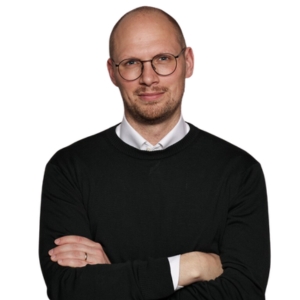
Dr Mathias Saggau's TGV Partners Fund delivered a 6.88% return in H1 2024, slightly underperforming the DAX's 8.86% gain. The concentrated 15-stock portfolio focuses on small and mid-cap companies outside major indices, with market caps ranging from 60 million to 30 billion euros. Saggau highlights a structural market risk from increasing ETF-driven concentration, where just three companies now represent 20% of the S&P 500, creating valuation disparities between mega-caps and smaller companies. The fund's investment philosophy centers on four criteria: reasonable business models, competitive advantages, quality management, and attractive pricing. Recent additions include Midwich Group, an audio-visual distributor trading at less than 10x earnings despite strong fundamentals, and FILA Holdings, a Korean holding company trading below the value of its Acushnet stake alone. The fund faces a management transition as founder Norman Rentrop plans to transfer operations to a new capital management company by year-end, though investment strategy and portfolio composition will remain unchanged. Despite short-term volatility in smaller companies, the concentrated approach has generated 9.3% annualized returns since inception.
The fund employs a concentrated value approach targeting excellent small and mid-cap companies with sustainable competitive advantages, quality management, and attractive valuations, deliberately investing outside major indices to capitalize on market inefficiencies.
The manager expects continued significant deviations from index performance due to the fund's strategy of investing beyond major indices. The structural changes in markets present both challenges and opportunities for the concentrated small-cap approach.
| Date | Letter | Tickers | Keywords | Pitches | Quick Takes |
|---|---|---|---|---|---|
| Jul 23 2024 | 2024 Q2 | 071050.KS, ABF.L, DCC.L, FERG.L, MIDW.L, TCX, UTDI.DE, WINE.L | Concentration, ETFs, Europe, Quality, small caps, value |
MWG.L 081660.KS |
TGV Partners Fund's concentrated small-cap value strategy delivered 6.88% in H1 2024. Manager Saggau warns of structural risks from ETF-driven market concentration while adding undervalued positions like Midwich Group and FILA Holdings. The 15-stock portfolio targets quality companies outside major indices, generating 9.3% annualized returns since inception despite ongoing management transition. |
| Feb 15 2024 | 2023 Q4 | BNTX, IBKR, MELI, NKDWF, PYPL, SCBFF, SILXY | Europe, long-term, small caps, software, technology, value |
ACGL|CHH|FDS|GWRE|IBKR|IDXX|MTN|SPOT|TSLA WINE.L |
German value fund delivered 17.3% in 2023 through concentrated small-cap investing with high portfolio turnover. Major winner was EQS Group takeover generating 63% return. Manager expects significant profit growth across portfolio companies in 2024 and sees compelling opportunities in smaller European businesses despite market strength. |
| Jul 26 2023 | 2023 Q2 | BNTX, GOOGL, PYPL, SLTD.DE, TUG.DE | Biotechnology, long-term, payments, semiconductors, technology | - | German long-term value fund achieving 6.9% annualized returns through concentrated positions in technology, biotech, and payments companies. Manager focuses on attractive entry prices and margin of safety, with key holdings in BioNTech, Siltronic, PayPal, and Alphabet. Emphasizes companies with sustainable competitive advantages capable of surviving various economic scenarios. |
| Feb 21 2022 | 2022 Q4 | 0A9O LN, EQS SW, IBKR, ITD IM, MCE GR, MELI, STNE, TCX | - | - |
| QUARTER | THEMES | TAGS |
|---|---|---|
| 2024 Q2 |
ETFsManager discusses the structural risk from increasing ETF concentration, noting that just three companies (Apple, Microsoft, Nvidia) now account for 20% of the S&P 500, up from less than 6% in 2015. This trend pushes large-cap valuations higher while depriving smaller companies of liquidity. The manager considers this a structural risk with potential unintended consequences. |
Index concentration Liquidity Valuations Structural risk |
Small CapsThe fund focuses on smaller companies outside major indices, with holdings ranging from 60 million to 30 billion euros market cap. Manager notes extreme price volatility in smaller companies, illustrated by System1's price swings from 2 pounds to 90 pence to 5 pounds. Despite volatility, the concentrated approach in smaller names has delivered strong returns. |
Concentration Volatility Illiquidity Value | |
ValueManager employs a value-oriented approach focusing on four criteria: reasonable business model, competitive advantage, quality management, and attractive price. The goal is to buy excellent companies at attractive prices rather than mediocre companies at excellent prices. Current holdings like Midwich trade at less than 10x sustainable profit despite strong fundamentals. |
Business model Competitive advantage Management quality Attractive pricing | |
| 2023 Q4 |
E-commercePortfolio includes exposure to e-commerce through Mercadolibre, the leading marketplace in South America, and About You. Mercadolibre was sold due to valuation concerns despite excellent operational development and competitive tailwinds from fraud scandals affecting competitors. |
Marketplaces Digital Commerce South America Fintech |
FinTechInvestment in Interactive Brokers, an online broker providing professional-level trading access with strong competitive positioning. The company has solid financials with $14.1bn equity and 21% customer growth in 2023 despite minimal marketing. |
Online Brokerage Trading Platforms Financial Services | |
Enterprise SoftwareEQS Group was a major holding providing investor relations and compliance software, particularly whistleblowing systems required by EU law for companies with 50+ employees. The company was acquired by Toma Bravo for EUR 40 per share, generating a 63% return. |
Compliance Software Regulatory Technology B2B Software | |
| 2023 Q2 |
AIManager discusses artificial intelligence as both opportunity and risk. Notes AI and ChatGPT hitting media headlines, with Alphabet missing out on AI initially but now seeing it as opportunity. Emphasizes AI's transformative potential while acknowledging associated risks. |
Artificial Intelligence ChatGPT Technology Innovation Disruption |
BiotechnologySignificant focus on BioNTech as leading vaccine manufacturer for COVID-19. Manager expects continued profits from vaccine and pipeline development for cancer and infectious diseases. Supported by Strüngmann brothers with strong pharmaceutical sector backing. |
Vaccines COVID-19 Pipeline Pharmaceuticals Innovation | |
SemiconductorsDetailed analysis of Siltronic as high-purity silicon wafer manufacturer. Notes critical position in semiconductor supply chain and strategic importance outside Taiwan/South Korea/Japan. Discusses industry growth potential and digitalization trends. |
Silicon Wafers Supply Chain Manufacturing Technology Strategic | |
E-commerceAnalysis of PayPal as global payment service provider well-positioned with consumers and merchants. Notes management change and strategic repositioning. Also discusses domain business opportunities and digital commerce trends. |
Payments Digital Commerce Fintech Global Positioning |
| Date | Pitch Type | Author | Ticker | Company | Industry | Sub Industry | Bull / Bear | Exchange | Keywords | Action |
|---|---|---|---|---|---|---|---|---|---|---|
| Jul 1, 2024 | Fund Letters | TGV Compound Fund | 081660.KS | FILA Holdings | Consumer Discretionary | Apparel, Accessories & Luxury Goods | Bull | Korea Exchange | Acushnet, Asia, China, Golf Equipment, holding company, Korea, Share Buybacks, Sportswear, Sum-of-parts, Titleist, Value trap | Login |
| Jul 1, 2024 | Fund Letters | TGV Compound Fund | MWG.L | Midwich Group | Information Technology | Technology Distributors | Bull | London Stock Exchange | Audio Visual, AV Distributor, Displays, growth, Owner-managed, Projectors, technology distribution, UK, undervalued, Value | Login |
| Dec 29, 2023 | Fund Letters | TGV Compound Fund | - | EQS Group AG | Software & Services | Application Software | Bull | XETRA | Compliance software, Europe, Germany, Investor Relations, market leader, Private Equity Takeover, RegTech, regulatory requirements, SaaS, Whistleblowing Systems | Login |
| Dec 29, 2023 | Fund Letters | TGV Compound Fund | ACGL|CHH|FDS|GWRE|IBKR|IDXX|MTN|SPOT|TSLA | Interactive Brokers Group Inc | Diversified Financials | Investment Banking & Brokerage | Bull | NASDAQ | competitive moat, Customer growth, Electronic Trading, financial services, Online Broker, Professional Trading, risk management, US, Value | Login |
| Dec 29, 2023 | Fund Letters | TGV Compound Fund | WINE.L | Naked Wines plc | Consumer Staples | Food Distributors | Bull | LSE | Consumer Discretionary, deep value, direct-to-consumer, e-commerce, founder return, turnaround, UK, Wine Subscription, working capital | Login |
| TICKER | COMMENTARY |
|---|---|
| MIDW.L | Midwich, founded in 1979 in Diss, Great Britain, has had a storied history. Originally founded as a dealer for computer parts and printers, the company became a subsidiary of the German builder's merchant Raab-Karcher in the early 1990s and was later taken over by a large US electronics distributor. In 2001, the then-management bought out the company. The current CEO, Stephen Fenby, joined in 2004 and is still the driving force behind the company today. In 2010, another management buyout took place under the leadership of Stephen Fenby. Over the past 20 years, Stephen has had a decisive influence on the company. Despite the IPO, he is still the company's largest shareholder. He and parts of the management control around a quarter of all shares. While Midwich had a turnover of around 120 million GBP in 2004, with a large proportion of printers, printer accessories, and TV screens, the business was fundamentally restructured in the following years. Sales were increased to 370 million GBP through numerous acquisitions leading up to the IPO in 2016. Today, eight years after the IPO, the company has continued to grow both organically and through acquisitions and has a turnover of around 1.3 billion GBP. It has established itself as one of the larger top dogs in the industry and has been able to increase its operating profit almost tenfold over the past ten years. As an AV (audio and video) distributor, Midwich specialises in the distribution of products such as displays, projectors, speakers, cameras, LCD walls, and a wide range of other audio-visual equipment from various manufacturers. These products are sold and rented to specialist dealers or installation companies. In a world where the number of screens and digital players is constantly increasing, the need for advice on feasibility and possibilities is also growing. Midwich's scale has become a distinct advantage. The company operates multiple showrooms where integrators can test various products with their clients. The greater the selection and number of manufacturers, the better the outcomes. I witnessed this firsthand during my visit to the 'Innovation House' in Bracknell near London, where project developers and customers regularly seek ideas and inspiration from Midwich specialists. The COVID-19 pandemic, in particular, had a significant impact on Midwich's business. While live events, concerts, and trade fairs—major markets for display technology and loudspeakers—came to a halt, there was a surge in demand for conference, telephone, and transmission technology. Additionally, the global supply chain disruptions from 2021 onwards presented challenges. Despite these hurdles, the company remained profitable throughout those times. Although the business has performed excellently in recent years, the share price has remained sluggish. The share price is roughly at the same level as in 2017 and close to the low point of the Corona crisis. However, the key difference is that Midwich now generates three times the sales and twice the profit compared to that period. Today, the shares are valued at less than ten times the sustainable profit and free cash flow and are, therefore, in my opinion, significantly too cheap. The combination of factors such as being an owner-managed, customer-centric company with excellent structural earnings growth and today's low valuation is a rare find. This is why I have been recommending buying shares in the Midwich Group for the TGV Partners Fund in recent months. |
| 071050.KS | FILA is likely known to most investors in the TGV Partners Fund as an Italian clothing brand, particularly renowned in the tennis world during the 'golden years' of the 1980s. However, this does not fully capture the current nature of the company and, above all, the background of this investment. At the end of the 1980s, the enterprising South Korean Yoon Soo (Gene) Yoon convinced FILA to move its shoe production to South Korea. Following some success, Gene Yoon was tasked by FILA with building FILA's business in South Korea. In the following years, Gene Yoon's efforts proved extremely successful, making Korea one of FILA's strongest markets and Gene Yoon the highest-paid employee in the company. While business in Korea flourished, FILA's parent company almost faced bankruptcy in 2003. In response, Gene Yoon first organised a management buyout of the Korean business in 2005, followed by a management buyout of the entire FILA group in 2007 – a major deal valued at an estimated USD 400 million at the time. This buyout made Gene Yoon one of the largest shareholders. FILA Holdings was subsequently listed on the South Korean stock exchange after the financial crisis in 2010. Even after the IPO, Gene Yoon remained actively involved in expanding the company: In 2010, the US conglomerate Fortune Brands announced its intention to focus on a few core areas and divest most of its business segments. In 2011, FILA Holdings, in partnership with Korean Mirae Asset Private Equity, acquired the golf ball, golf club, and golf clothing businesses from Fortune Brands in a carve-out transaction worth approximately USD 1.2 billion. This acquisition included well-known golf brands such as Titleist, FootJoy, and Scotty Cameron. Titleist is unquestionably the crown jewel of the company. Its brand and market position make it indisputably the best golf ball business on the planet. And as often as balls are lost, one can certainly speak of a business model with recurring revenues. Following a revitalisation, the company was listed on the stock exchange in 2016 as Acushnet Holdings. Named after the birthplace of Titleist in Massachusetts, Acushnet is now developing independently and is still listed on the stock exchange in the USA. FILA Holdings owns 53% of the shares and thus just over half of the company, which is valued at around USD 4 billion. This substantial holding worth USD 2 billion is a significant value for FILA shareholders. In the years following its IPO in 2010, the FILA brand has seen significant growth in Asia, especially in China. For example, FILA is now one of the largest Western brands in China, following Nike and Adidas. Gene Yoon has successfully expanded FILA's presence in Asia through strategic partnerships and licensing agreements. In recent years, the company has regularly achieved sales exceeding USD 1 billion and has had excellent profitability, at times surpassing USD 200 million per year. 2023 was a clear exception, with a small operating loss due to a restructuring of the company's stores in the USA. Despite this growth, the share price of FILA Holdings, listed in Seoul, does not reflect the company's achievements. With a market capitalisation of around USD 1.7 billion (after currency conversion), FILA Holdings is trading at a discount to the value of its stake in Acushnet alone, which is valued at USD 2 billion. This undervaluation does not account for FILA's operating income, suggesting that the holding company is being significantly undervalued. This situation is not uncommon for holding companies and is often referred to as a 'holding discount' or 'value trap', implying a permanent destruction of value. However, both Acushnet and FILA Holdings have been actively conducting share buybacks, which is a positive move considering the substantial discount to intrinsic value. Additionally, the Yoon family has taken advantage of the low prices of FILA Holding and increased its stake in the company from 20% in December 2021 to around 36% in 2024. Unlike many other Korean companies, FILA Holdings provides appropriate English-language reporting and engages with its shareholders transparently and collaboratively, and the company headquarters in Seoul is open to visitors. All this reinforces my confidence in Gene Yoon's ability to execute value-creating, complex, and large financial transactions throughout his career. His ability to maintain partnerships across different cultural areas assures me that we, as shareholders of FILA Holdings, are in good hands. Given this context, I recommended the purchase of shares of FILA Holding by the TGV Partners Fund. |
| Ticker | Put/Call | Amount Bought | Shares Bought | % Change | Weight % |
|---|---|---|---|---|---|
| No Recent Buys Data | |||||
| Ticker | Put/Call | Amount Sold | Shares Sold | % Change | Weight % | Status |
|---|---|---|---|---|---|---|
| No Recent Sells Data | ||||||
| Industry | Prev Quarter % | Current Quarter % | Change |
|---|---|---|---|
| No industry data available | |||