


The BuySide Digest

aka The BSD

What is the BSD?

Whatever you call them, you know their names, and more importantly, you know that when they open their mouths, the market listens. Whether they are quoted in print, make a television or podcast appearance, put out a new white paper, or file an SEC doc, we’ll be sure to track, analyze, and synthesize the most important takeaways.

Kyle Bass

Jeffrey Gundlach

Dan Loeb

Jim Rogers

Robert Shiller

+ many more

sIGN UP FOR free

"*" indicates required fields

This field is for validation purposes and should be left unchanged.
Password*
Strength indicator
Status

Media appearances of BSDs

Media appearances of prominent investors and their main themes.

Hedge Fund Letter Summaries

Quick summaries of the hardest hitting letters of the quarter scrubbed by our analyst team.

Elevator Pitches

Pitches on the names our favorite funds are buying. Filter out the noise and get the quick elevator pitch on why they are long with links to their writeup.

The BSD Archive

Read the old Ds

Happy Friday! In this week's letters, - Goehring & Rozencwajg Associates on oil, LNG and commodities; - Headwaters Capital on the market concentration and small-caps; - Giverny Capital Asset Management on the effects of AI; - Elevator pitches for MELI; ORE CN; 4441 JP Quarter in progress: 811 fund letters of Q4 are live on our database!
We just launched the BSD 13Fs Investor Page, your new central hub to: ? Search BSD Gurus by name, portfolio value, or ticker ? Track 13F filings from 100+ top hedge funds and BSDs ? Compare turnover rates, holdings, and portfolio shifts ⏱️ Spot new positions and high-conviction moves instantly From David Einhorn to Warren Buffett, their most important filings are now all in one place — simplified, visual, and always up-to-date.
Enjoy fishing for ideas!


Q4 2025 INVESTOR LETTER SUMMARIES


  • The outbreak of hostilities in the Persian Gulf has already reverberated through global oil markets with remarkable speed. Rather than attempting a full survey of supply and demand trends in both oil and natural gas, which we will address in a future letter, we focus here on the more immediate consequences of the effective closure of the Strait of Hormuz.
  • As of March 11, 2026, the Strait of Hormuz remains effectively closed, disrupting the transport of roughly 20 percent of global oil production and a similar share of seaborne LNG supply.
  • China responded quickly on March 11 by imposing export restrictions on refined petroleum products in an effort to safeguard domestic supply. Meanwhile, rising U.S. shale production has sharply reduced American reliance on imported oil, leaving China as the world’s dominant crude importer by a wide margin.

 

Headwaters Capital

  • Recent price action has left the market as concentrated as it has ever been, and arguably even more concentrated than it appears, because the profits of many leading companies are tied to AI infrastructure spending. Valuation gaps between winners and losers have widened to historic extremes, while many high-quality businesses now trade at historically cheap multiples.
  • In my view, today’s market offers as many opportunities and risks as I can remember. If you believe that earnings drive stock prices over the long term, then the trade in unprofitable companies should eventually reverse. It remains open to debate whether the AI trade will persist, but for now it largely represents a single bet on how much capital expenditure five companies will commit to building data centers.
  • If you own the small-cap index, you are becoming increasingly exposed to both AI-related capital spending and unprofitable companies. In a historically concentrated market that is heavily levered to a single theme, I believe the value of an actively managed portfolio will become increasingly clear. That brings me to a business update for Headwaters Capital.
 

Giverny Capital Asset Management

  • I believe that, over time, regardless of how artificial intelligence changes our lives, owning a portfolio of high-performing businesses should remain a satisfactory strategy. Our portfolio includes the country’s largest distributors of air conditioning and plumbing supplies, two of the most efficient insurance companies, a leading water treatment service business focused on small towns, and a highly profitable manufacturer of spare parts for airplanes, among others.
  • AI is unlikely to displace these businesses. On the contrary, as skilled users of technology, they may improve efficiency and strengthen their competitive positions relative to smaller, subscale competitors through the adoption of AI tools.
  • I am not smart enough to predict whether those returns will ultimately prove delightful or disappointing, much less to offer a confident view on whether we are in a bubble. However, any student of economic history knows that periods of rapid infrastructure buildout have often ended poorly for investors.
 

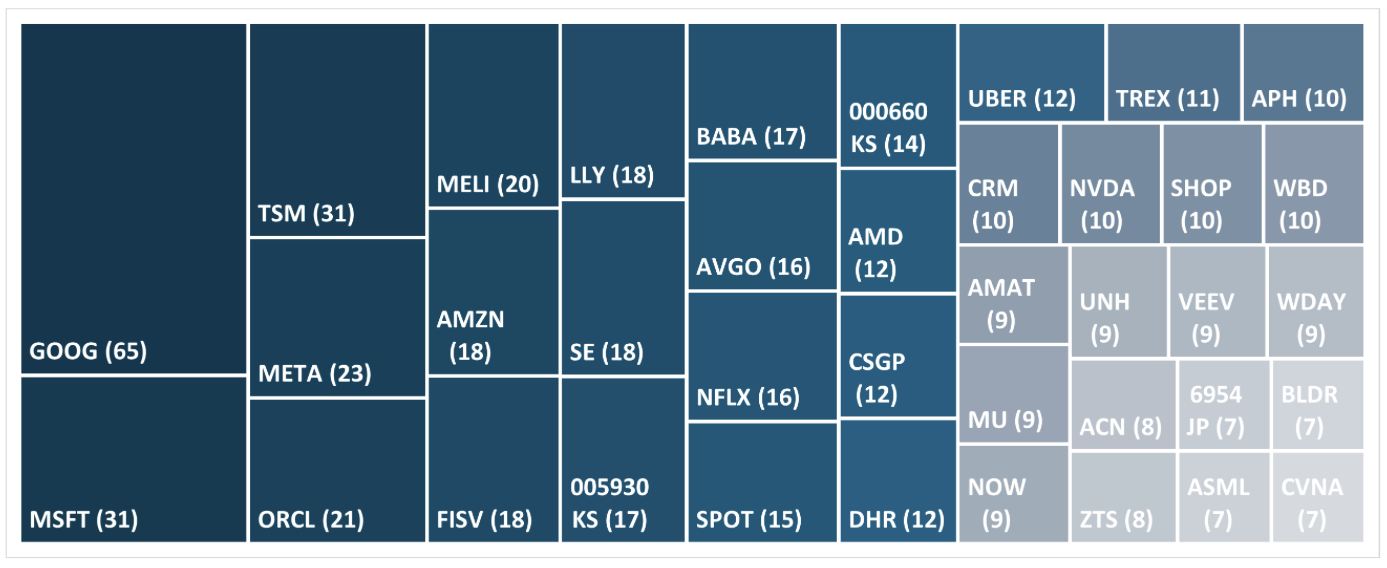
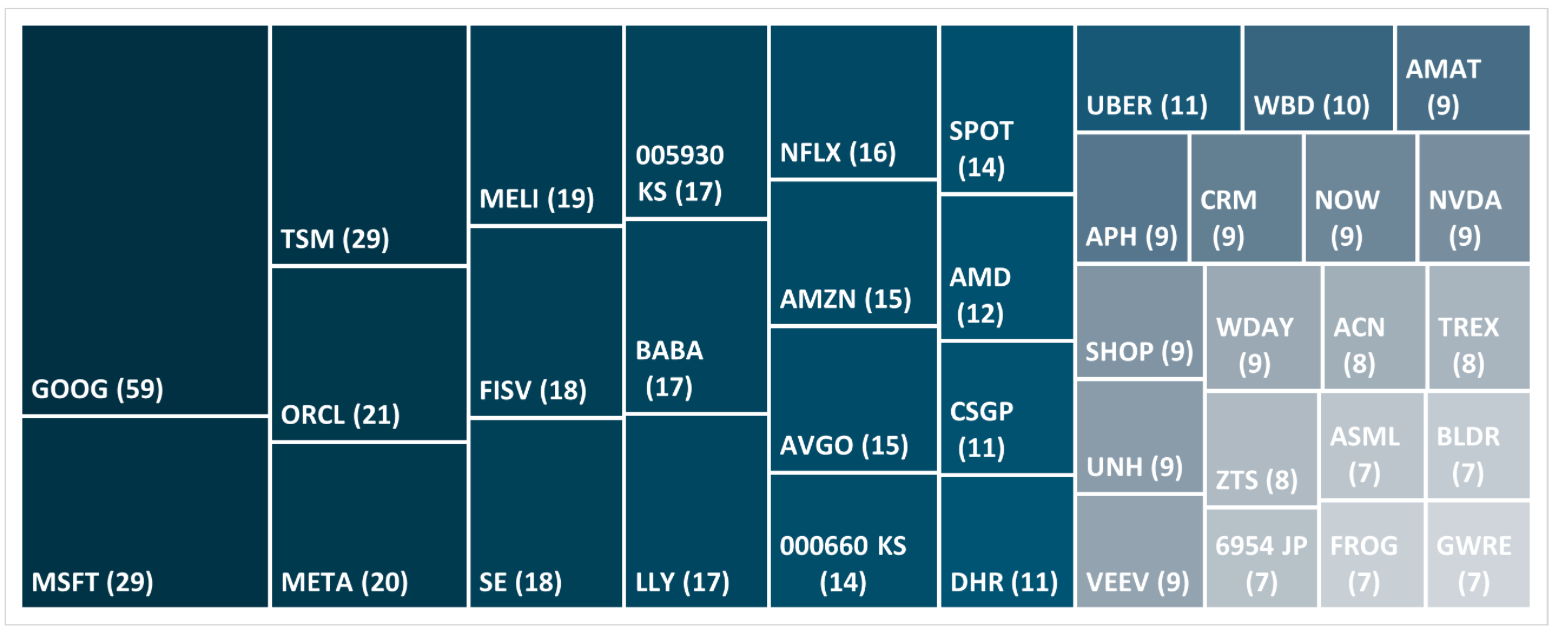
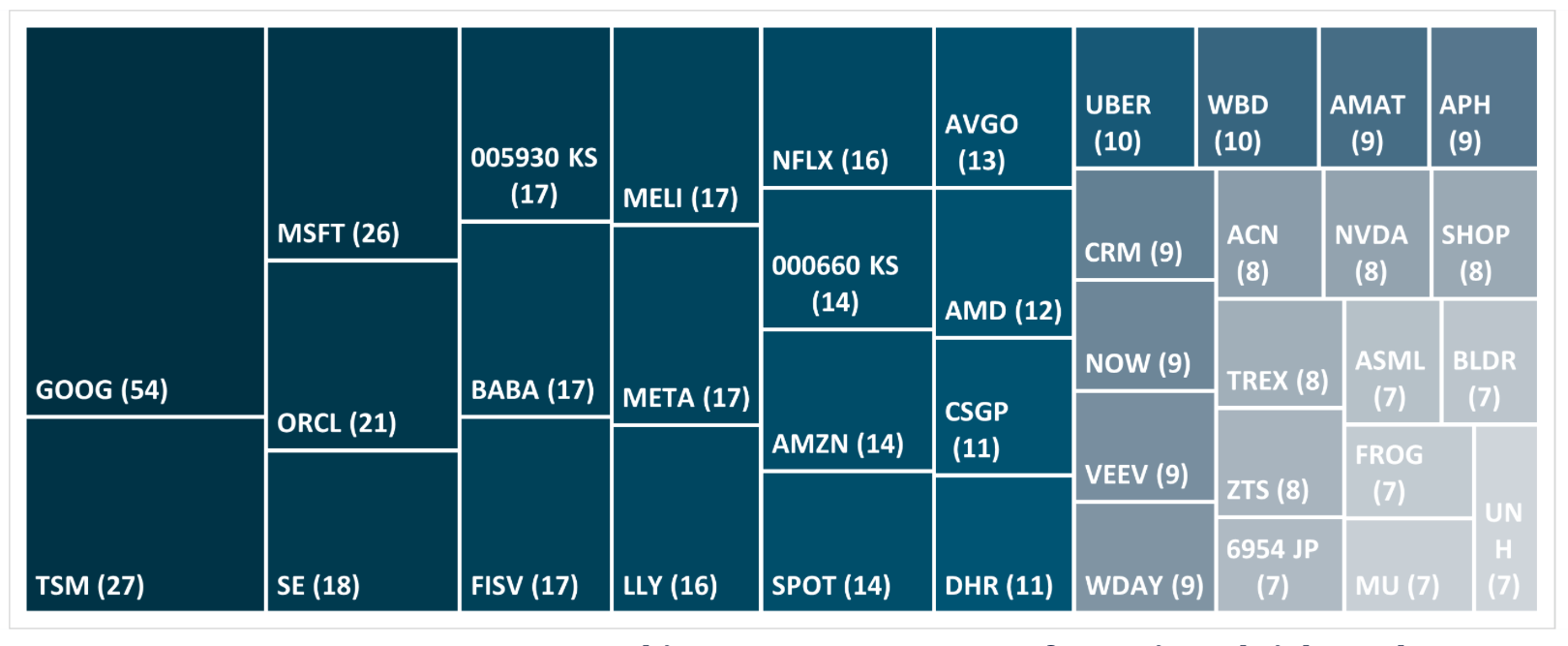
Q4 2025 TICKER TREEMAP
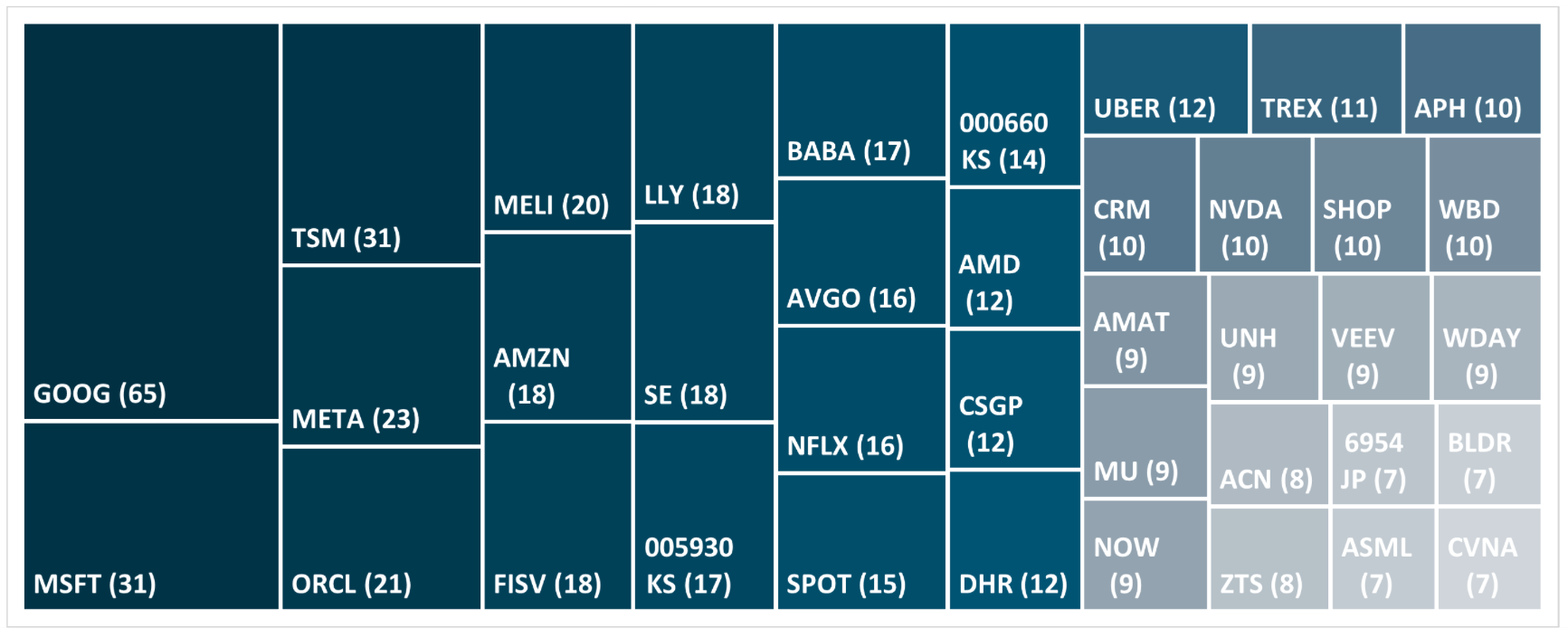

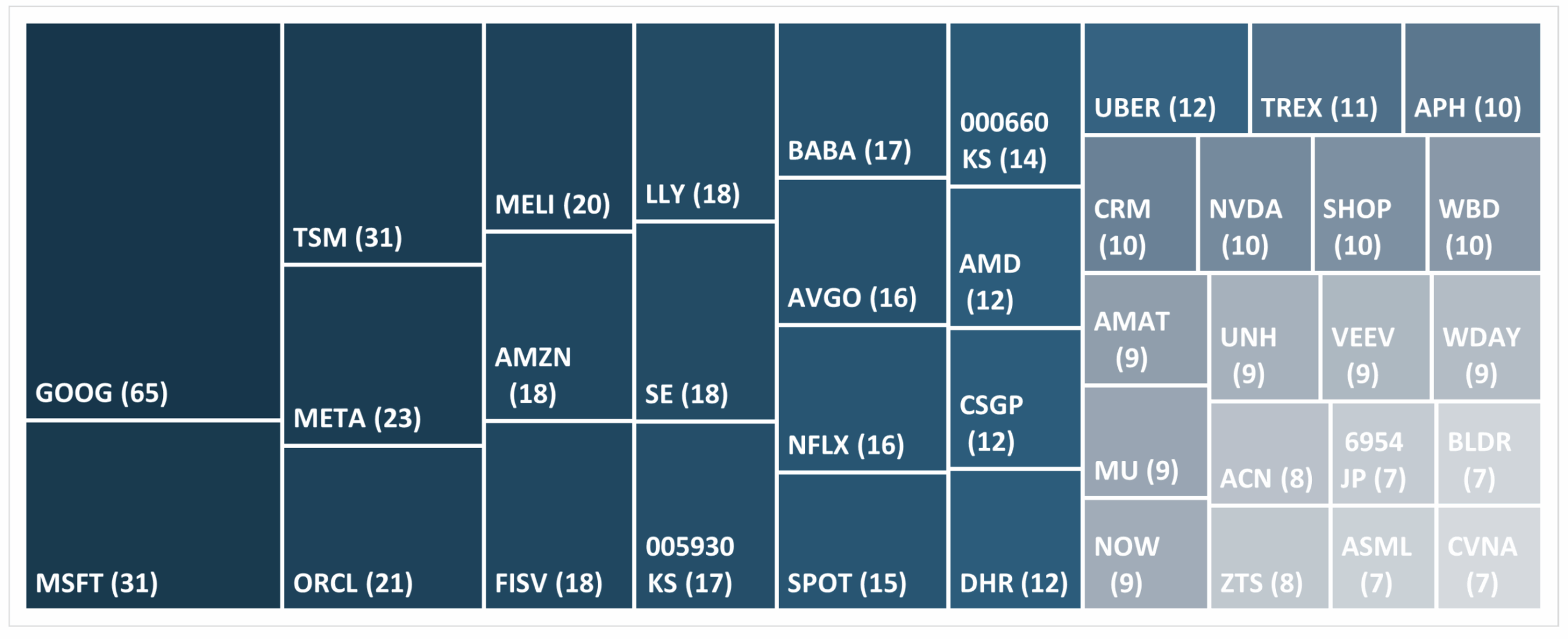
This quarter's treemap of mentioned tickers (by Count)

ELEVATOR PITCHES BY FUNDS


  MercadoLibre (by Infuse Partners)

MercadoLibre (by Baron FinTech Fund)

  • MercadoLibre, Inc., the leading e-commerce marketplace and fintech provider in Latin America, detracted from performance on concerns over competition and margin pressure.
  • Continued volatility in Argentina, one of MercadoLibre’s fastest-growing markets, also raised concerns that weaker economic conditions could result in less reliable profit contribution.
  • We maintain conviction in the company’s long-term opportunity. In our view, MercadoLibre is uniquely positioned to capture a significant share of Latin America’s underpenetrated e-commerce and fintech markets because of its scale, customer trust, and unique ecosystem.

 

Orezone Gold Corp (by Aegis Value Fund)

  • Investor fears peaked when elements of the Burkina Faso government demanded partial divestment of a neighboring mine owned by West African Resources, leading to a halt in West African.
  • Despite the country risk, Orezone continues its flagship Bomboré mine expansion project in Burkina, which is reported to be on track and should begin substantially improving production and cash flow from the mine in 2026.
  • In January 2026, Orezone announced that it will acquire the Casa Berardi mine in Quebec from Hecla, adding a second mine in a much superior, top-tier jurisdiction.

 

Tobila Systems (by Smoak Capital)

  • Tobila Systems is a Japanese company focused on fraud and spam call prevention. Tobila has successfully developed a new B2B growth engine that will accelerate revenue, profit, and free cash flow growth going forward yet amazingly trades at 4.5x EV/FCF with its B2B segment growing revenue over 50% per year.
  • Tobila’s fast growing Solutions segment was effectively hidden from investors until last year when the company began to separately disclose TobilaPhone Biz and Cloud.
  • Shares trade at only 4.4x EV/FCF and likely only 3x on an EV/Fwd FCF basis. Even at a low absolute multiple of 10-12x FCF, upside is 80-110%, and 140-180% on a forward basis.

HIGHLIGHT OF THIS WEEK


MEDIA APPEARANCES BY BSDs

            • Short sellers along with the financial journalists are the actually only actors in the marketplace that are incentivized to ferret out fraud. I’ve called this the golden age of fraud … the fraud cycle follows the financial cycle with a lag.
            • I suspect this cycle will be the granddaddy of them all when it comes to corporate bad behavior. My general rule of thumb is if Wall Street is offering it to you, you ought to be careful.
   
            • I think that the changes that are underway today, and in particular the introduction of AI, render the world much less predictable than at any time, probably any time ever, and certainly any time in my lifetime.
            • There is no asset that is so good that it can't become overpriced and lethal, and there are very few things that are so bad that they can't get cheap enough to be attractive.
            • What AI basically does, I've come to realize, is it makes predictions. It doesn't answer questions. It makes predictions.
   
            • What we are trying to do is look out five to seven years in the future and estimate what a company is worth then, and buy it at a big discount to that today.
            • As terrible as the war is, it might affect one year’s cash flow a little bit; it doesn’t really alter the seven‑year business value very much.
            • So much of the value today is in intangible assets, so we redo GAAP accounting to Oakmark accounting, and on our numbers we are looking for companies selling at a discount that are well managed and will grow value over time.


Happy Friday! In this week's letters, - Lux Capital on Market Concentration; - Hinde Group on Financial Markets, AI and the Economy; - ACATIS Investment on the Geopolitical Risks; - Elevator pitches for SHC; HII; NFG Quarter in progress: 794 fund letters of Q4 are live on our database!


We just launched the BSD 13Fs Investor Page, your new central hub to: ? Search BSD Gurus by name, portfolio value, or ticker ? Track 13F filings from 100+ top hedge funds and BSDs ? Compare turnover rates, holdings, and portfolio shifts ⏱️ Spot new positions and high-conviction moves instantly From David Einhorn to Warren Buffett, their most important filings are now all in one place — simplified, visual, and always up-to-date.
Enjoy fishing for ideas!


Q4 2025 INVESTOR LETTER SUMMARIES


  • Markets are concentrated in fewer companies. Capital is concentrated in fewer managers. Power and wealth are concentrated in fewer people. Rage, fear, jealousy, and envy—the primal forces of human psychology—are themselves concentrated on the have-compute, the have-revenues, the have-portfolios, the have-networks, and the have-influence.
  • Concentration is capitalism’s secret success. It goads asset allocators to place the heaviest bets on the brightest prospects. It prods founders to seek the strongest partners in the most fertile niches, ready for returns. It cajoles employees to headhunt toward emerging winners.
  • Consider the concentration of risk and the structural fragility beneath that surface. In 2008, nearly 40% of foreign portfolio investment into the U.S. came from central banks and sovereign wealth managers. Today, it is 13%. Meanwhile, the share of U.S. equities held by foreigners has nearly tripled to a record high—from just over 20% to just under 60%.
 

Hinde Group

  • Financial markets delivered a relatively uneventful fourth quarter. Even the longest-ever U.S. federal government shutdown failed to shake market confidence. The S&P 500 stayed within a few percentage points of where it began the quarter. It ended with a small gain. Interest rates and credit spreads were similarly dormant. Both continue to imply a relatively optimistic outlook for the economy and corporate profits over the medium term.
  • Although the U.S. labor market clearly weakened over the course of 2025, and lower-income households are increasingly struggling to make ends meet, the Atlanta Fed currently estimates U.S. economic growth for the fourth quarter will come in at a heady 3.7%. The Atlanta Fed expects healthy contributions from both household consumption and private non-residential fixed investment.
  • The AI investment boom continues to be an important source of strength for the U.S. economy. Over the past few weeks, Big Tech companies have announced plans to spend more than $660 billion on capital expenditures in 2026, mostly for AI chips and data centers. That is up almost 80% over the already gargantuan amount those companies invested in 2025. The AI investment boom stimulates economic growth through both the direct impact of AI-related investments and the wealth effect of soaring values for public and private AI-related equities.
 

ACATIS Investment

  • The year 2025 ended with Warren Buffett retiring as CEO of Berkshire Hathaway. A fixed star in the investor universe is exiting the stage. There are very few people who leave behind such useful insights about life and about building wealth. We have full confidence in his successor, Greg Abel, even if he is not quite as entertaining.
  • The global parameters are shifting. We are very upset when Russia or China do what the U.S. just did in relation to Ukraine and Taiwan. But somehow, the Americans get away with it. South America is in the U.S. sphere of influence, and when a country is not willing to go along, force is applied. We have seen this movie before. Remember Chile, Panama, or Grenada.
  • In the meantime, the U.S. has ordered many planes to Europe, from where they can intervene in Iran. The Iranian regime is stirring up trouble everywhere and is also working on nuclear weapons, but it is weak. There is even talk of the Iranian government fleeing to Moscow. This means that the regime might be about to fall in Iran, another sign of Russia’s impotence in the Middle East.
 

Q4 2025 TICKER TREEMAP


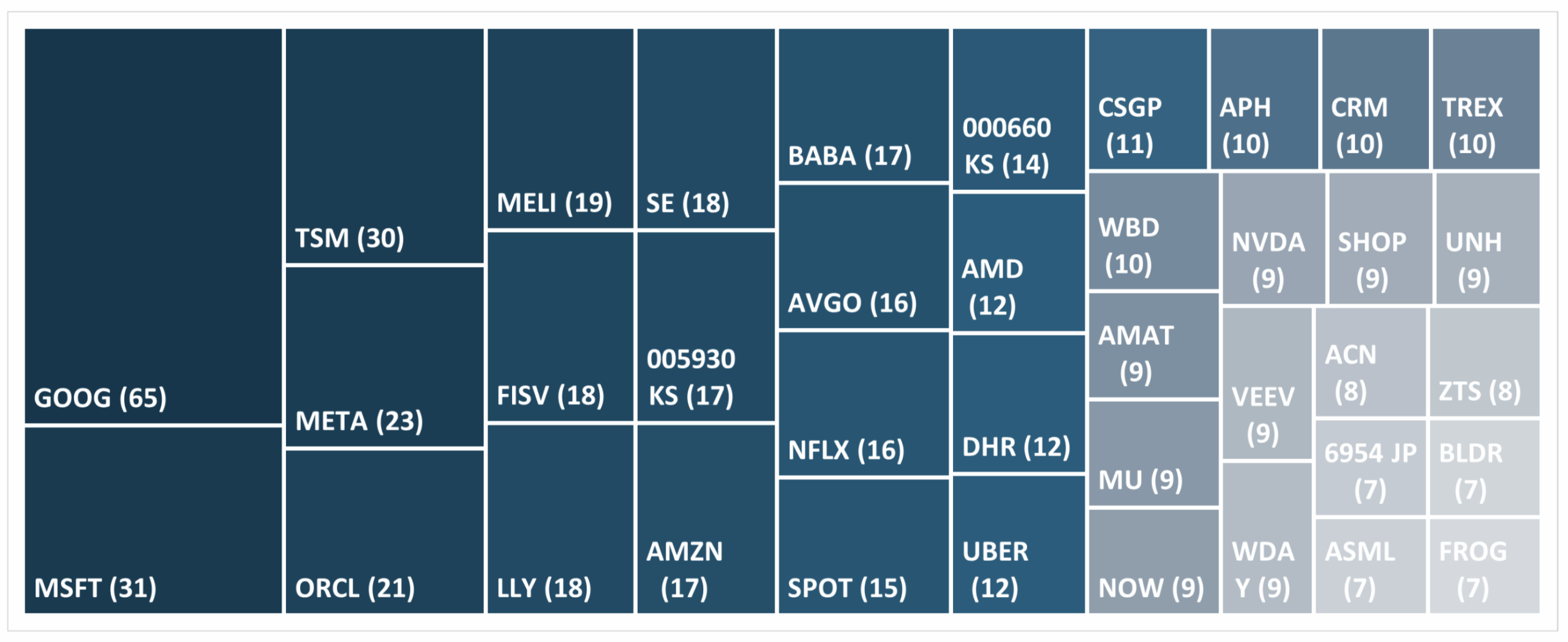
This quarter's treemap of mentioned tickers (by Count)

ELEVATOR PITCHES BY FUNDS


Sotera Health Company (by McIntyre Partnerships)

  • SHC’s stock was volatile in 2025 but ultimately finished strong. Despite the share price volatility, SHC remains a predictable, growing, and recession-proof business.
  • For comparison, STE trades ~25x 2026 EPS and 21x 2027 EPS, versus SHC at 17x and 14x my estimates, respectively.
  • Given the inflecting growth and discount to peers, we retain a large position. I believe our investment is positioned to benefit from SHC’s ~10% EBITDA growth per year, continuing capital returns, and potential multiple expansion. I value SHC at 25x my 2027 EPS estimate of $1.20, implying a $30 valuation versus its current $17 price.
 

Huntington Ingalls Industries (by Tactile Fund)

  • Huntington Ingalls is entering a multi-year period of margin expansion in 2026 as its heavy investments in labor productivity and supply chain resiliency finally begin to bear fruit.
  • As one of only two major naval shipbuilders in the United States, the company is a primary beneficiary of the sustained global demand for nuclear aircraft carriers and submarines.
  • With a record backlog and a pivot toward new contracts that better reflect current inflationary conditions, HII is well-positioned to deliver significant free operating cash flow and improved credit measures.
 

National Fuel Gas (by The Gabelli Equity Income)

  • The pipeline & storage (P&S) business operates 3,000 miles of pipe and 34 storage facilities primarily in the state of New York. The E&P business, Seneca Resources, operates in Appalachia primarily in the Marcellus and Utica shales and ended FY 2025 with nearly 5.0 Tcfe of proved gas reserves, making it one of the most resource-rich utilities in the U.S.
  • These reserves are strategically important as natural gas demand in the Northeast accelerates, driven in part by rising electricity consumption from data centers and AI-related load growth.
  • NFG’s pending $2.6 billion acquisition of CenterPoint Energy’s Ohio gas utility will roughly double NFG’s regulated utility rate base.

HIGHLIGHT OF THIS WEEK


MEDIA APPEARANCES BY BSDs


            • As cracks spread through private credit markets in recent weeks, the head of Saba Capital Management began offering investors quick cash for their stakes in such vehicles run by Blue Owl Capital Inc.
            • Now he's making the same proposal to backers of a Starwood Capital Group real estate fund that has severely curtailed withdrawals for nearly two years.
   
            • Billionaire investor Bill Ackman relishes playing the role of contrarian. Plans he unveiled this week to take public both a new investment fund and his hedge-fund firm will have him swimming against the Wall Street tide in multiple ways.
            • The type of investment fund Ackman is looking to raise, a closed-end fund, has been out of favor with investors for years.
     
            • We still think the U.S. consumer is in better shape than the headlines would suggest, but it is clearly a K‑shaped recovery with big winners and a lot of people left behind.
            • In a K‑shaped economy, those at the top see their wealth and stock portfolios soar, while workers on the lower rungs struggle with higher costs and much less of a safety net.


Happy Friday! In this week's letters, - Saltlight Capital on AI Capex; - African Lions Fund on African Frontier Equities; - Cove Street Capital on the Bubble and Speculation; - Elevator pitches for EXTR; SE; RELY Quarter in progress: 794 fund letters of Q4 are live on our database!
We just launched the BSD 13Fs Investor Page, your new central hub to: ? Search BSD Gurus by name, portfolio value, or ticker ? Track 13F filings from 100+ top hedge funds and BSDs ? Compare turnover rates, holdings, and portfolio shifts ⏱️ Spot new positions and high-conviction moves instantly From David Einhorn to Warren Buffett, their most important filings are now all in one place — simplified, visual, and always up-to-date.
Enjoy fishing for ideas!


Q4 2025 INVESTOR LETTER SUMMARIES


  • Entering 2026, the AI epoch remains transformational, and, as a theme, it has dominated US equity markets in both size and mindshare. The market, however, is struggling to price it coherently. We see three paradoxes today and, importantly, these interdependent observations cannot all be true at once.
  • Upstream supply-chain participants are increasingly signalling that 2028 and beyond capex could be materially higher, not lower: This signal directly contradicts the widely held “digestion” narrative, which assumes that AI-driven capex will taper meaningfully over the medium to long term.
  • Market scepticism toward NVIDIA analyst revenue forecasts: Sell-side analysts have increased their cumulative revenue projections for NVIDIA by $1.1 trillion over the next five fiscal years. However, the current share price suggests that the market harbours significant doubt about the achievability of these elevated expectations.
  • AI ROI is unclear, yet software is being repriced as if disruption is certain: SaaS multiples have derated sharply on fears that AI will disintermediate seat-based software, even as many investors remain sceptical about near-term AI payback.
 

African Lions Fund

  • My theory, though I’ll admit it’s unproven, is that if, as it appears, we are in a bull market for African frontier equities, liquidity should, all else equal, improve. There will be more buyers and sellers taking a closer interest in frontier African equities and putting more money to work.
  • There has also been a proliferation of new investment fund products in Tanzania, spawning new demand for equities. What’s missing is IPOs. We are hopeful that, as the bull market gathers steam and valuations climb, some privately held businesses, or government-owned enterprises, may be attracted to list.
  • The message, I think, is that, yes, definitely, everyone should be concerned about currency depreciation when investing in Frontier African markets. But these are not the only currencies where big depreciations can happen. Look at the yen. It’s lost a whopping 31.5%, or 6.9% per annum, in the time we’ve been running the Fund.
 

Cove Street Capital

  • Since no one really knows anything about the future, no matter how apparently dystopian, I don’t have to burden myself with any unease regarding my relative global standing in technology industry cognition.
  • Do the words Pets.com bring anyone to January 2000? There were 14 AI Super Bowl commercials in 2026, which “rhymes” with what happened to the ad spenders from 2000, but there simply is not a “good enough” paper for me to confidently nod my head to with a smirk. And yes, there were actually Nobel prizes awarded to those who “proved” efficient markets.
  • What most of 2026 has shown is how little money on the margin is “investing” and how much is “whatever” leveraged in large pods of capital with apparently tight stop-losses, where selling on the way down is the natural corollary to buying on the way up.
 

Q4 2025 TICKER TREEMAP


This quarter's treemap of mentioned tickers (by Count)

ELEVATOR PITCHES BY FUNDS


Extreme Networks (by SouthernSun SMID)

  • We believe EXTR has the opportunity to grow revenues in the low double-digit range and gain market share due to advantages in product architecture, pricing, and customer experience.
  • Given Extreme Networks’ competitive positioning, improving mix of recurring revenues, and attractive valuation, we believe the company fits well within both of our strategies, where we seek businesses with strong market positions, financial flexibility, capable management teams and clear opportunities to improve operating performance and the potential to compound value over time.
 

Sea Limited (by Hayden Capital)

  • Sea Limited shares have declined ~-45% over the past few months. The magnitude of the decline over the last few months is surprising, especially given that not much has changed in their fundamentals.
  • The company’s e-commerce arm is projected to increase its Gross Merchandise Value by over 25% in 2026, fending off intense competition from TikTok Shop and Temu through aggressive logistics investments.
  • So what’s priced in after the stock decline? At ~$107, Sea Limited is trading at roughly 7x 2028 EV/EBITDA, with +30% y/y EBITDA growth.
 

Remitly Global (by Unconventional Value)

  • Remitly is capable of sustaining a mid-teens or higher growth rate while steadily expanding margins.
  • Modest execution gives you a business earning well in excess of the current multiple, while the bear case means a structural break in a trend that has persisted for a decade. This is a company I suspect will improve over time, not deteriorate.
  • The path to 20%-plus operating margins seems credible and not overly dependent on pricing power. A new customer typically generates gross profit in excess of the upfront cost in the first year and remains active for years, producing the 6x LTV/CAC the business has maintained to date.

HIGHLIGHT OF THIS WEEK


MEDIA APPEARANCES BY BSDs


            • Legendary macro investor Stan Druckenmiller joins Hard Lessons for a conversation with Iliana Bouzali.
            • Druckenmiller reflects on his early career and how he learned to act decisively and change course quickly when the facts on the ground shift. Hear how he would construct a portfolio if he had to start over today, why contrarianism is overrated, and which stock he regrets selling too early.
     
            • There is a massive difference between taking a large initial position and allowing a position to become large. Few investors understand this distinction.
            • Taking a large initial "at-cost" position is the investment equivalent of getting married after one date. In contrast, building conviction in a management team and business is like building trust in a relationship. It can’t be rushed. Trust is built at the beat of its own drum. Every position is unique, just like every relationship is unique, and conviction scales differently with each investment.
     
            • John Arnold is a legendary energy trader and philanthropist. We cover what he learned from studying the unmatched scale and speed of China's manufacturing base, the flywheel that gave him "the best seat in the industry" as a natural gas trader, and his systems-level tour of the challenges facing America's energy, education and healthcare sectors.


Happy Friday! In this week's letters, - The D. E. Shaw Group on the markets and the economy; - Semper Augustus on investment and the market history; - Hayden Capital on AI Scare and AI cycle; - Elevator pitches for TVE CN; IHS; OXY Quarter in progress: 771 fund letters of Q4 are live on our database!Want to know what BSDs are buying (or selling)?
We just launched the BSD 13Fs Investor Page, your new central hub to: ? Search BSD Gurus by name, portfolio value, or ticker ? Track 13F filings from 100+ top hedge funds and BSDs ? Compare turnover rates, holdings, and portfolio shifts ⏱️ Spot new positions and high-conviction moves instantly From David Einhorn to Warren Buffett, their most important filings are now all in one place — simplified, visual, and always up-to-date.
Enjoy fishing for ideas!


Q4 2025 INVESTOR LETTER SUMMARIES


  • Given the extreme level of current U.S. equity market concentration relative to recent history, one might assume this trend will eventually revert. However, it is helpful to consider what it would take for the weight of the ten largest companies in the S&P 500 to return to the pre-2020 average of 20.8%.
  • In one such scenario, if the largest stocks were to remain flat, the rest of the index would need to return more than 160%. Given the scale required for full reversion, it seems likely that markets could remain highly concentrated for some time.
  • Investors who believe concentration will persist may wish to consider its effect on their portfolio’s risk characteristics and alpha potential. They may also want to consider how those effects might be addressed most efficiently. This may include questioning managers’ risk models, expanding the opportunity set by allowing short positions, or re-evaluating the level of tracking error that best aligns with manager skill and portfolio objectives.
 

Semper Augustus

  • First, I offer profound apologies to Joni and to her dark yacht-rock devotees under the sun, wherever they may sail. From the quote above, I have a guess about what they might think about artificial intelligence.
  • Warren will stay on as chairman indefinitely, and he will be in the office daily. Slowing down at 95, particularly with reading, stepping away from day-to-day responsibilities must be bittersweet. I am sure Warren always believed he would go out in the proverbial pine box, just as Charlie did at age 99 in late November 2023, only 34 days shy of his 100th birthday.
  • The active, value-oriented investor should have prospective advantages over the broad stock market at secular peaks and secular plateaus. That investor should also have advantages against capitalization-weighted stock indices trading at lofty valuations. The bursting of the late 1990s dot-com and communications bubble proved a terrific time to launch Semper Augustus.
 

Hayden Capital

  • Over the last few weeks, we have seen a resurgence in market volatility that has been driven by the “AI Scare Trade.” Like a virus, it started with software, then spread to internet companies, and then broadened further into sectors like insurance, financial services, and real estate services. Anything that is asset-light and operates primarily in the digital world is facing the market’s wrath.
  • After three years, the AI cycle is shifting from building core infrastructure to attacking real-world applications. Investors are in a fog of war as they try to figure out what that means for incumbent companies. They are asking which legacy firms will be beneficiaries and which are prone to disruption.
  • What is unusual about the current drawdown is that many software companies, which have borne the brunt of the sell-off, are still growing. For example, ServiceNow just reported 21% year-over-year growth, and Atlassian reported 23% year-over-year growth. We have not yet seen evidence of AI materially affecting these businesses.
 

Q4 2025 TICKER TREEMAP


This quarter's treemap of mentioned tickers (by Count)

ELEVATOR PITCHES BY FUNDS


Tamarack Valley Energy (by Barometer Capital)

  • Tamarack Valley has designed a scaled 2026 capital program of approximately $400 million, specifically aimed at maximizing total returns while maintaining flexibility in a fluctuating commodity price cycle.
  • The company's "Clearwater" asset remains the primary engine of growth, with over 70% of the budget dedicated to primary development and waterflood expansion to mitigate decline rates.
  • At a budget assumption of $60 WTI, Tamarack is projected to generate significant free funds flow while delivering strong shareholder returns through base dividends and share buybacks.
 

IHS Holding Ltd. (by City Different Investments)

  • IHS Holding is currently at the center of a landmark $6.2 billion merger agreement with MTN Group, announced on February 17, 2026. Under the terms of the deal, shareholders will receive $8.50 per share in cash, representing a significant premium over recent trading levels.
  • While our exposure to emerging markets will always be limited, we see attractive potential in this recovery story—in an industry we have known for years. IHS is the 5th largest independent tower company in the world, operating approximately 37,000 towers across seven countries in Africa and Latin America.
  • For details, please see our recent synopsis, IHS Towers: A Comeback Story for 2026.
 

Occidental Petroleum Corp (by Mott Capital)

  • Both Occidental and the energy sector haven't performed this poorly versus the S&P 500 since the dot-com bubble. Additionally, oil appears to be the only commodity that is not performing well.
  • Occidental seemed like a good way to play a rise in oil prices, given its tight relationship with the commodity. Additionally, it has a strong shareholder base, with Berkshire Hathaway owning more than 26% of the stock. On top of that, the five largest shareholders own a combined 51.6% of the shares, which means that most of the shares are "locked up," and if buyers step into the name, there will be fewer shares available to buy, potentially adding to an advance.

HIGHLIGHT OF THIS WEEK


MEDIA APPEARANCES BY BSDs


Boaz Weinstein Is Hunting Blue Owl’s Funds

            • Boaz Weinstein’s investment firm Saba Capital and Cox Capital are preparing a tender offer for stakes in three semi-liquid private-credit funds operated by Blue Owl Capital.
            • Saba and Cox announced Friday plans for a buyout offer to shareholders at prices between 65% and 80% of net asset value, an apparent effort to capitalize on rising angst about funds Blue Owl and other private fund managers marketed to individual investors.
     
            • David Tepper, billionaire founder of hedge fund Appaloosa Management, sent a strongly worded letter to Whirlpool’s board, accusing the appliance maker of destroying shareholder value and calling for sweeping changes to its strategy.
            • Tepper said in the letter that he watched with “a certain astonishment” as the company issued equity in what he called a large and unnecessary dilution of shareholders.
     
            • Ken Fisher, founder, Executive Chairman and Co-Chief Investment Officer of Fisher Investments, addresses two pressing questions: Do recent layoffs and unemployment data signal a recession, and will AI permanently replace many jobs?


Happy Friday! In this week's letters, - Broyhill Asset Management on AI Investments; - Van Der Mandele Arar Fund on Economy, Trump and Gold; - Troy Asset Management on AI Valuation; - Elevator pitches for MRK; ET; AMRZ Quarter in progress: 789 fund letters of Q4 are live on our database!
Want to know what BSDs are buying (or selling)? We just launched the BSD 13Fs Investor Page, your new central hub to: ? Search BSD Gurus by name, portfolio value, or ticker ? Track 13F filings from 100+ top hedge funds and BSDs ? Compare turnover rates, holdings, and portfolio shifts ⏱️ Spot new positions and high-conviction moves instantly From David Einhorn to Warren Buffett, their most important filings are now all in one place — simplified, visual, and always up-to-date.
Enjoy fishing for ideas!


Q4 2025 INVESTOR LETTER SUMMARIES


  • The surge in AI-driven infrastructure is a powerful force on par with the greatest capital investment cycles in history. Previous cycles, such as the build-out of railroads in the 1800s, electricity in the 1920s, and the late 1990ssurge in telecommunications infrastructure, required heavy investment to retool the economy for a new era.
  • While it’s difficult to gauge where we stand in the current cycle, historical comparisons can provide some perspective and a dose of humility. It would seem the clock is ticking on this cycle. The boom, now entering its fourth year, is already mature and inline with historical buildouts, which typically peaked over a 4-6-year period (chart below).
  • Meanwhile, consensus is that continued investments by hyperscalers will keep asset prices propped up, with consultants like McKinsey estimating global investment approaching $7 trillion by 2030.
 

Van Der Mandele Arar Fund Van Der Mandele Arar Fund

  • Donald Trump has selected Kevin Warsh to be the new Federal Reserve Chair. While he has a history of being an inflation hawk, it is also true that he was only hawkish when the U.S. president was a Democrat. Moreover, he has clearly expressed that he wants to lower interest rates significantly at the earliest convenient time, even as the Federal Reserve Board is keeping rates stable.
  • I am inclined to repeat my commentary from two months ago. Trump will not get off stage voluntarily, just as he did not get off stage voluntarily on January 6, 2021. Either he finds a way to genuinely or disingenuously get re-elected, or he tries to cancel the elections or their results.
  • Here, I am most contrarian. While an occupation of Greenland would have put a wrench in my optimism, the fact is that Trump backed down on this. For now, this removes a previously perceived risk from the table, which makes the change in outlook a net positive.
  • Because we are holding such a substantial portion of our assets in gold miners, it makes sense to comment on what we think about the current price of gold.
 

Troy Asset Management

  • Sustained demand for gold, despite higher prices, is less surprising when one considers the damage being wrought on the alternatives. Diversification away from the incumbent reserve currency began over a quarter of a century ago, when U.S. dollars peaked as a share of global foreign exchange reserves in 1999.
  • During the quarter, we attended an AI and technology conference in Arizona. Several people we met who are involved in the data center buildout confirmed two things. First, supply constraints are curtailing the pace at which infrastructure is currently being built. Second, as soon as compute capacity comes online, it is being used. This differs from the peak of the dot-com bubble, when “dark” fiber cables were being laid down, meaning they were installed well ahead of any need for utilization.
  • The problem, however, lies in the economics. Valuations are elevated, and the most extreme pockets of excess appear in private markets. The latest proposed funding round for OpenAI reportedly values the company at $830 billion. That implied value is comparable to that of JPMorgan.
 

Q4 2025 TICKER TREEMAP


This quarter's treemap of mentioned tickers (by Count)

ELEVATOR PITCHES BY FUNDS


Merck & Co. Inc. (by Antipodes Global)

  • The company was boosted by positive clinical news, including FDA approval for a combined treatment with Astellas/Seagen’s Padcev, supporting continued Keytruda revenue growth ahead of its U.S. patent expiry in 2028.
  • Positive mid-stage data for heart drug Winrevair further fuelled investor optimism, with Merck planning to advance the drug into Phase 3 development.
  • Sentiment was also supported by the announcement of a US$700 million funding agreement with Blackstone Life Sciences to support development of sac-TMT, an experimental antibody-drug. These developments reinforced confidence in Merck’s pipeline depth and long-term growth prospects.
 

Energy Transfer (by Alpha Wealth Funds)

  • Energy Transfer is a toll collector on America’s energy highways, earning money on volume rather than commodity prices. The partnership owns and operates over 105,000 miles of pipelines and significant storage capacity.
  • Recent insider buying by Chairman Kelcy Warren, totaling over 4 million shares, reinforces conviction. ET is receiving inquiries from power plants and more than 70 prospective data centers seeking natural gas connectivity.
  • With regulated, inflation-protected contracts and an approximately 8% yield, ET offers steady income and optionality tied to the AI-driven power demand surge.
 

Amrize (by Unison Asset Management)

  • Amrize’s moat is process knowledge and long-term client relationships rather than technology leadership. It lives inside customer operations where replacement risk is more political than technical.
  • Following the spin-off from Holcim, Amrize shares have lagged despite high-quality assets. U.S. housing softness masked underlying earnings power. We increased our stake in Amrize, supported by strong insider buying led by CEO Jan Jenisch, who purchased over 1.25 million shares on the open market. We believe Amrize offers significant upside as U.S. construction normalizes and management applies focused portfolio discipline.

HIGHLIGHT OF THIS WEEK


MEDIA APPEARANCES BY BSDs


            • Josh Kushner is the founder and Managing Partner of Thrive Capital. We cover the stories behind Thrive's defining investments in Stripe and OpenAI, how a culture of entrepreneurship allows Thrive to stay small while making concentrated bets, and the family history and famous artists that have shaped his worldview.
     
            • As per reporting from Business Insider, the Greenlight Capital founder feels that gold could effectively replace U.S. Treasurys as the world’s primary reserve asset, or move so far that the proximity becomes virtually impossible to brush off.
            • Einhorn lays out the argument that central banks aren’t treating gold as a dusty diversification tool and have been increasing their holdings at a healthy pace.
     
            • (In contrast to the bullish view expressed yesterday on the Fin TV show - see SLINK's confident consumer outlook on @cnbc), we remain cautious on the consumer.
            • This week we put on a three way pairs trade - long $AMZN/Short $COST $WMT. This morning $WMT delivered weak guidance (I expect the shares to fall).


Happy Friday! In this week's letters, - Hinde Group on the economy and inflation; - Doubleline Capital on the markets and credits; - Alpine Capital on the AI, Europe, and the FED; - Elevator pitches for ARE; SLVM; LIN; Quarter in progress: 746 fund letters of Q4 are live on our database!
Want to know what BSDs are buying (or selling)? We just launched the BSD 13Fs Investor Page, your new central hub to: ? Search BSD Gurus by name, portfolio value, or ticker ? Track 13F filings from 100+ top hedge funds and BSDs ? Compare turnover rates, holdings, and portfolio shifts ⏱️ Spot new positions and high-conviction moves instantly From David Einhorn to Warren Buffett, their most important filings are now all in one place — simplified, visual, and always up-to-date.
Enjoy fishing for ideas!


Q4 2025 INVESTOR LETTER SUMMARIES


  • The battle with post-pandemic inflation is officially over. In both November and December, the annualized six-month change in the Fed’s preferred inflation gauge, the price index for personal consumption expenditures excluding food and energy (core PCE), came in at 1.9%.
  • The picture is even clearer when housing is removed from the equation. The price index for core PCE excluding housing increased at just a 1.0% annualized rate over the second half of 2023, which is well below the Fed’s target.
  • In November and December, the yield on the two-year U.S. Treasury fell from 5.07% to 4.23%. This decline reflected expectations that the Fed would soon pivot from tight monetary policy toward a more balanced stance.
 

Doubleline Capital

  • 2025 was a fantastic year for those invested in the public markets, with roaring equity performance and strong fixed-income returns across geographies and sectors. In China, 2025 was marked by on-again, off-again trade negotiations with the United States. Those negotiations included a face-to-face meeting between President Donald Trump and President Xi Jinping on the sidelines of the October APEC Summit in South Korea, which was the first such meeting since 2019.
  • More broadly, 2025 challenged many traditional economic assumptions and models. The year was marked by elevated volatility driven by government policy, including tariffs and a federal shutdown.
  • An anticipated inflation spike tied to the unexpected tariff regime never materialized. Instead, many companies heavily frontloaded inventories to mitigate the impact on corporate earnings, which contributed to sharp swings in quarter-over-quarter GDP growth projections.
 

Alpine Capital

  • AI 2.0: Global Abundance. The shift from software to physicals. Our optimism regarding technology remains undiminished, but we are adapting our tactical focus to meet the next phase of development. We believe we are entering "AI 2.0," a period in which artificial intelligence begins to foster a state of global abundance.
  • Europe and Emerging Markets. Navigating the "American Bully" and the EM catch-up. The surge in Emerging Markets (EM) has been a standout feature of 2025, yet it brings a complex set of questions for the long-term investor.
  • The Federal Reserve: A shifting mandate and the path to lower rates. The Federal Reserve currently stands at a crossroads, navigating the difficult "dual mandate" of maintaining price stability while ensuring maximum employment. We have frequently highlighted the precarious juxtaposition the Fed finds itself in.
 

Q4 2025 TICKER TREEMAP


This quarter's treemap of mentioned tickers (by Count)

ELEVATOR PITCHES BY FUNDS


Alexandria Real Estate (by Warden Capital)

  • ARE is the largest life sciences landlord in the US – this sector has struggled with a double whammy of a biotech bust and big oversupply (triple if you want to count WFH, though lab space wasn’t hit quite as hard as normal office in this regard). I believe the stock is currently oversold – their portfolio is by far the highest quality with some truly top tier assets.
  • The bio sector is coming back, and I believe strongly in its long term growth. In fact it began to recover somewhat in 2025, just take a look at the XBI.
  • ARE is trading at an ~10%+ cap rate today, which I believe falls to low 9s on future NOI declines – too cheap given the strong lease terms & asset quality.
 

Sylvamo Corporation (by Alluvial Capital)

  • In the fourth quarter, Alluvial Fund purchased shares of Sylvamo Corp, a manufacturer of uncoated freesheet paper. Sylvamo has a strong history of profitability and free cash flow generation but is facing short-term headwinds from lower paper pricing, weak European demand, and the expiration of a long-term supply agreement.
  • The company is investing in its South Carolina mills to replace lost supply and increase capacity. Industry supply reductions should support pricing. Management expects the investment program to generate a 30%+ IRR and return Sylvamo to $300 million in annual free cash flow by 2027.
 

Linde plc (by YCG Investment)

  • The industry benefits from powerful economies of scale, physics-driven efficiency advantages, and prohibitive transportation costs that require dense, localized distribution networks. Long-term take-or-pay contracts with cost pass-through provisions create inflation-protected, utility-like cash flows.
  • Despite these strengths, Linde’s shares were pressured by a global industrial slowdown, which we believe caused investors to over-discount the business as near-term “dead money.” We view this as a market-timing mispricing in a high-quality compounder with durable pricing power and long-term volume growth.

HIGHLIGHT OF THIS WEEK


MEDIA APPEARANCES BY BSDs


            • Greenlight Capital’s David Einhorn anticipates the Federal Reserve will issue more interest rate cuts this year than what’s being anticipated and that’s giving him greater confidence in his gold bet.
            • If we have 4% or 5% inflation, sure, then he won’t be able to persuade people, but otherwise he’s going to argue productivity. I think by the time we get to the end of the year, it’s going to be substantially more than two cuts.
   
            • Billionaire investor Bill Ackman told clients on Wednesday that his hedge fund bought shares in Meta Platforms (META.O), opens new tab late last year, betting the technology giant will benefit from artificial intelligence.
            • We believe Meta’s current share price underappreciates the company’s long-term upside potential from AI and represents a deeply discounted valuation for one of the world’s greatest businesses.
     
Steven Cohen
            • Pfizer (PFE.N), opens new tab agreed to accept $29 million to resolve a dispute with the U.S. Securities and Exchange Commission stemming from the regulator's 2013 insider trading settlement with billionaire Steven A. Cohen's former hedge fund SAC Capital Management.
            • The proposed payment disclosed in a Tuesday court filing represents nearly two-fifths of the $75.2 million left over from SAC's $601.8 million settlement over trades in drugmakers Wyeth and Elan by Mathew Martoma, a former SAC employee who was later convicted of securities fraud and conspiracy. The U.S. Treasury would get the remaining $46.2 million.