

The BuySide Digest

aka The BSD

What is the BSD?

Whatever you call them, you know their names, and more importantly, you know that when they open their mouths, the market listens. Whether they are quoted in print, make a television or podcast appearance, put out a new white paper, or file an SEC doc, we’ll be sure to track, analyze, and synthesize the most important takeaways.

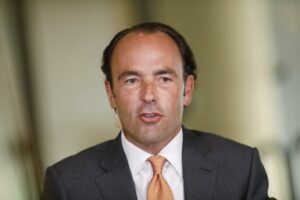
Kyle Bass

Jeffrey Gundlach

Dan Loeb

Jim Rogers

Robert Shiller

+ many more

sIGN UP FOR free

"*" indicates required fields

This field is for validation purposes and should be left unchanged.
Password*
Strength indicator
Status

Media appearances of BSDs

Media appearances of prominent investors and their main themes.

Hedge Fund Letter Summaries

Quick summaries of the hardest hitting letters of the quarter scrubbed by our analyst team.

Elevator Pitches

Pitches on the names our favorite funds are buying. Filter out the noise and get the quick elevator pitch on why they are long with links to their writeup.

The BSD Archive

Read the old Ds

Happy Friday! In this week's letters, - Minot Light Capital Partners on the economy and market drivers - Artisan Focus Fund on market uncertainty and concentration - ACR Alpine Capital on market volatility and risks - Elevator pitches for CSL, CF, and DT Quarter in progress: 464 fund letters of 2026 Q1 are live on our database! We just launched the BSD 13Fs Investor Page, your new central hub to: ? Search BSD Gurus by name, portfolio value, or ticker ? Track 13F filings from 100+ top hedge funds and BSDs ? Compare turnover rates, holdings, and portfolio shifts ⏱️ Spot new positions and high-conviction moves instantly From David Einhorn to Warren Buffett, their most important filings are now all in one place — simplified, visual, and always up-to-date.
Enjoy fishing for ideas!


Q1 2026 INVESTOR LETTER SUMMARIES


  • We believe the general macro narrative that drove this sector rotation is that an extended war will lead to an acceleration in raw material shortages and inflation, which is good for oil & gas and basic materials. This would inevitably lead to higher interest rates and pain for the U.S. consumer.
  • Potential consumer weakness would be magnified if rapid AI progress leads to a meaningful increase in unemployment. Furthermore, this narrative implies that defense spending by the government could increase dramatically, potentially crowding out healthcare spending and forcing cuts.
  • In this scenario, defense spending would join the AI infrastructure build as one of the dominant drivers of GDP growth, while healthcare and consumer spending would remain under pressure.
 

Artisan Focus Fund

  • Entering 2026, the 10 largest software sector companies in the S&P 500® Index derived around 55% of their current valuation, on a median basis, from the net present value of the next 10 years’ cash flow in the discounted cash flow model. This means that the remainder of their valuations, or approximately 45%, came from assumptions beyond the year 2036.
  • Geopolitical developments have reintroduced a different kind of uncertainty, one that resists quantification altogether. Escalation involving Iran is not simply a macro variable to plug into a model. It affects energy markets, global risk appetite, inflation, and policy responses in ways that are nonlinear and path dependent.
  • We believe the U.S. is entering a new phase of industrial expansion that is often characterized as cyclical but is more appropriately understood as the early stages of a multi-decade rebuild of domestic productive capacity. For over two decades, U.S. consumption and production diverged.
 

ACR Alpine Capital

  • The U.S. shocked the world when Operation Epic Fury was launched on February 28th. Despite devastating attacks on Iranian military assets, Iran’s hardline regime has remained undeterred. As we write, a fragile ceasefire is in place, with a contested and closed Strait of Hormuz.
  • The rise in energy prices is causing knock-on effects on producer prices, consumer prices, and demand. However, we believe the negative impact on consumption and our holdings in consumer cyclicals is likely to be short-lived and immaterial from a valuation perspective. In our view, both the U.S. and Iran are motivated to de-escalate.
  • Recession is always a possibility, but unless hostilities persist and snowball into something worse, we do not think current events in the Middle East will cause a recession. The investments most impacted by recent events are naturally related to energy, so this is a good time to discuss how we adjust these direct exposures for commodity price volatility.
 

ELEVATOR PITCHES BY FUNDS


Carlisle Companies (by ROCKLINC Partners)

  • Building owners, contractors, and architects alike turn to Carlisle to manufacture materials for the entire building envelope, the "skin" of the building that keeps heat in and rain out. As one of the few manufacturers in the United States, Carlisle is able to provide a full-coverage warranty that no small competitor can match.
  • The typical 20- to 30-year full-coverage warranty creates a natural replacement cycle, as owners prioritize complete retrofits to secure a new long-term guaranteed warranty.
  • With over 70% of the U.S. non-residential building stock exceeding 25 years of age, Carlisle is well positioned to accelerate growth and expand margins.
 

CF Industries (by Spheria Global Opportunities)

  • CF Industries is North America's largest nitrogen fertiliser producer, manufacturing ammonia, urea, UAN and ammonium nitrate from its network of plants across the US and Canada.
  • CF's business model is built around the nitrogen "spread", meaning it purchases North American natural gas as its primary feedstock (at Henry Hub prices) and sells nitrogen products whose prices are set by global marginal cost producers.
  • Whilst the magnitude of the near-term earnings tailwind will depend on the duration of the supply disruption, we are comfortable owning a high-quality, cash-generative business.
 

Dynatrace (by Starboard Value)

  • We made a substantial investment in Dynatrace because we believe the Company is a high-quality, durable observability platform with a long runway for continued growth and an opportunity for significant margin expansion.
  • Enterprise adoption of AI should ultimately result in accelerating revenue growth for Dynatrace. As enterprises deploy more applications and more AI agents, the volume and complexity of telemetry data will grow materially.
  • If Dynatrace can execute on these opportunities, we believe Dynatrace can generate more than $3.30 of free cash flow per share by FY2029, nearly double FY2026 levels.
 

HIGHLIGHT OF THIS WEEK


MEDIA APPEARANCES BY BSDs


SoftBank Plans to Create and List AI Vehicle Roze in the US

  • SoftBank Group Corp. plans to establish and list an AI and robotics company called Roze in the US, potentially raising capital to propel founder Masayoshi Son’s growing bets on artificial intelligence.
  • The company aims to create and float Roze as soon as this year, though the timing could slip to 2027, according to people familiar with the matter.
 

Boaz Weinstein Set to Triumph in Fight for Baillie Gifford Trust

  • Boaz Weinstein is set to win a vote to oust the board of a Baillie Gifford & Co. trust that placed an early bet on SpaceX, the activist investor’s biggest win in his long campaign targeting British investment trusts.
  • A proposal by Weinstein’s Saba Capital Management is expected to have garnered enough support to replace the entire board of Edinburgh Worldwide Investment Trust with three candidates nominated by the hedge fund, the trust said in a statement on Thursday.
 

Warren Buffett has stepped aside. Berkshire is now Greg Abel's show.

  • Berkshire Hathaway (BRKa.N), opens new tab shareholders making the pilgrimage to Omaha, Nebraska, for the conglomerate's annual shareholder weekend will find much that looks familiar.
  • Discount shopping. The 5K run. Tens of thousands of like-minded investors and Berkshire fans. It is by far the largest shareholder ​gathering in corporate America.
  • Warren Buffett will be there. But for the first time in 60 years, the spotlight will not be his.
 

Happy Friday! In this week's letters, - Claret Asset Management on geopolitics and markets during war - Boyar Value Group on AI and valuation; - Appalaches Capital on the payment-rails ecosystem - Elevator pitches for KEX; OVV; FP CN Quarter in progress: 308 fund letters of 2026 Q1 are live on our database! We just launched the BSD 13Fs Investor Page, your new central hub to: ? Search BSD Gurus by name, portfolio value, or ticker ? Track 13F filings from 100+ top hedge funds and BSDs ? Compare turnover rates, holdings, and portfolio shifts ⏱️ Spot new positions and high-conviction moves instantly From David Einhorn to Warren Buffett, their most important filings are now all in one place — simplified, visual, and always up-to-date.
Enjoy fishing for ideas!


Q1 2026 INVESTOR LETTER SUMMARIES


  • Geopolitical shocks rarely derail the structural trajectory of the global economy permanently. Once the initial shock is absorbed and priced in, the market typically shifts its focus back to its core drivers: corporate earnings, inflation trends, central bank interest-rate policy, and the broader macroeconomic cycle. Historical precedents include World War II in 1941, the Gulf War in 1991, the Iraq War in 2003, and Russia’s invasion of Ukraine in 2022.
  • The pandemic year of 2020 marked the end of a four-decade era defined by steadily declining interest rates and highly accommodative monetary policy. By contrast, the 2025–2026 landscape is defined by normalized borrowing costs and elevated macroeconomic uncertainty. The unpredictability of global trade policy, AI-driven market distortions, and the inherent difficulty of short-term macroeconomic forecasting have all raised the cost of capital for economic participants.
  • For years, structurally declining interest rates artificially inflated asset prices and helped bail out heavily leveraged businesses. Today’s higher-rate environment changes the calculus entirely. Capital is no longer free, which means businesses must rely on genuine operational profitability rather than cheap debt to survive.
 

Boyar Value Group

  • Artificial intelligence was one of the quarter’s defining themes, as investors increasingly questioned whether the enormous sums being committed to AI would ultimately generate adequate returns. Microsoft was a good example of these crosscurrents.
  • A decline of 30%, 50%, or even more does not automatically make a stock cheap. Some companies may never regain their previous highs because their underlying business economics or competitive positions have changed. Others may have simply been overvalued to begin with.
  • History is filled with examples of investors paying such high prices for “quality” that even excellent companies ultimately produced disappointing returns. The Nifty Fifty era of the early 1970s was one example. The late 1990s provided another, when investors crowded into beloved blue-chip companies at valuations that assumed years of perfection. In both cases, the businesses often remained strong, but the stocks proved poor investments because the starting prices were simply too high.
 

Appalaches Capital Appalaches Capital hedge fund letter

  • Initially, our investment was made after the Credit Card Competition Act was reintroduced in January of this year. Senators Durbin and Marshall are effectively seeking to introduce manufactured competition into the payment-rails ecosystem in order to limit the fees charged by Visa and Mastercard. Among other proposals, the bill would require large card-issuing banks to offer unaffiliated alternative networks for credit-card transaction routing.
  • I believe part of the bill’s political appeal is rooted in a misunderstanding of how card networks actually operate, or at least in a convenient obfuscation of the economics behind transaction fees. Interchange fees are typically around 2–3%, depending on the transaction, and the networks do serve as the governing authorities that set these rates.
  • The second question is what the likely impact would be on the card networks if the bill were actually enacted. Fortunately, the Durbin Amendment provides useful historical precedent. Debit cards have had multiple routing networks for roughly fifteen years, yet Visa and Mastercard have maintained a strong grip on the market.
 

ELEVATOR PITCHES BY FUNDS


Kirby Corp. (by Meridian Growth Fund)

  • Kirby Corp. is the largest domestic tank barge operator in the United States, transporting petrochemicals, refined products, and agricultural chemicals through its inland and coastal marine fleets, with an additional distribution and services segment.
  • The company benefits from a disciplined supply environment in the inland market and a rapidly expanding power generation backlog.
  • During the quarter, shares advanced as strong performance in the coastal marine and power generation businesses more than offset ongoing pricing pressure in the inland market, while the substantial backlog provided confidence in forward growth visibility.
 

Ovintiv Inc. (by Hotchkis & Wiley)

  • Ovintiv is an independent E&P with leading positions in the Permian and Montney basins that trades at a discount despite high-quality, long-life unconventional assets.
  • We own Ovintiv for exposure to an energy market generating significant free cash flow, with assets positioned favorably on the global cost curve. Ovintiv outperformed in the first quarter as oil prices surged following the Strait of Hormuz closure, with Brent crude peaking near $127.
  • The company's Permian and Montney assets benefited from the geopolitical risk premium, while its disciplined capital allocation and shareholder return framework resonated with investors seeking cash flow generation.
 

FP Newspapers (by HalvioCapital)

  • FP owns 49% of a partnership that owns the leading newspaper in Canada's 6th largest town, Winnipeg, called the Winnipeg Free Press and some other smaller news outlets.
  • The Winnipeg Free Press is extremely embedded in the 803,000 residents of Winnipeg with 46% of Winnipeg adults reading the Free Press on a weekly basis. While print advertising has declined most years, circulation revenue has remained extremely resilient.
  • FP uses the equity accounting method for its main asset which makes it hard to screen for as a quick glance or view of the financial statements won't tell the whole story.


MEDIA APPEARANCES BY BSDs


Leon Cooperman warns markets are 'too expensive'

  • I look around the world, and I say between Iran and the lack of leadership in Washington and the lack of integrity in Washington, that the market doesn’t deserve to be where it’s selling. It’s too expensive.
  • Markets may be acting as though conditions are more stable than they really are — even as the underlying environment becomes more fragile.
 

Billionaire Bill Ackman unveils bold IPO plan to Robinhood CEO

  • During the conversation, Ackman told Tenev that he plans to pump billions of dollars into large- and mega-cap stocks within weeks as he believes that since the beginning of the war in Iran, some of the world's best businesses have become available at some of the lowest valuations in their history.
  • The billionaire highlighted the artificial intelligence (AI) infrastructure boom, the infrastructure legislation during the tenure of former president Joe Biden, the tax legislation during the current Donald Trump administration, and $18 trillion in investment deals as massive drivers of demand, jobs, and economic progress.
 

Jeremy Grantham warns of 'painful' consequences from the oil spike

  • Nothing is ever sustained, but that is clearly painful and will create balancing effects — markets get weak, demands gets less, etc.You know, things can get bad in a real hurry.
  • If you think the future looks one of two or three best futures that we have ever had in the last hundred years, you're smoking dope. This is a fraught, dangerous, growth-limiting world now.
 

Happy Friday! In this week's letters, - Broadleaf Partners on Iran war, private credit, and AI fatigue - Manole Capital Management on Payment Systems and its innovation - St. James Investment Company on Efficient Market Hypothesis - Elevator pitches for PGR; XPEL; VID SM Quarter in progress: 188 fund letters of 2026 Q1 are live on our database! We just launched the BSD 13Fs Investor Page, your new central hub to: ? Search BSD Gurus by name, portfolio value, or ticker ? Track 13F filings from 100+ top hedge funds and BSDs ? Compare turnover rates, holdings, and portfolio shifts ⏱️ Spot new positions and high-conviction moves instantly From David Einhorn to Warren Buffett, their most important filings are now all in one place — simplified, visual, and always up-to-date.
Enjoy fishing for ideas!


Q1 2026 INVESTOR LETTER SUMMARIES


  • With respect to the war, we have always viewed geopolitics as a set of binary events that are difficult to time from an investment perspective. Trump could exit this conflict as quickly as he entered it, potentially reversing the recent market declines just as quickly as they occurred. We simply do not know. In such a fluid environment, it is difficult to put thoughts into writing because the news flow can change before the ink dries, which is why this update has been a bit slower to publish than most.
  • With respect to the private credit markets, a few higher-profile blowups — loans funded outside the traditional banking system — have caused leaders like JPMorgan’s Jamie Dimon to wonder whether there are similar canaries in the coal mine. Since the credit cycle is one of the key factors we believe influences near-term value in the markets, we are not quick to dismiss such concerns. At the same time, many experts believe these are isolated events and typical credit-cycle dynamics rather than signs of systemic stress.
  • The final contributor to recent weakness may be “AI fatigue,” a term economist Ed Yardeni coined in the fourth quarter of 2025 to describe growing investor exhaustion within the space, particularly across the Magnificent Seven cohort. That fatigue has since evolved into what we would call a “Disruption Virus,” with AI-driven disruption pressuring valuations across large parts of the software sector.
 

Manole Capital Management

  • We are big fans of the expression KISS, or “keep it simple, stupid.” In our view, simplicity still wins in payments. For all the innovation reshaping the payments industry, consumer behavior remains remarkably consistent. Most shoppers still gravitate toward what feels simple, familiar, and reliable. New technologies may grab headlines, but at the point of sale, convenience and control continue to outweigh novelty.
  • Payment innovation has rarely been constrained by a lack of ideas. It has almost always been constrained by adoption. New technologies routinely promise faster, smarter, or more personalized experiences, yet consumers consistently gravitate toward what feels simple and reliable. That same dynamic applies today as artificial intelligence begins to reshape how people shop and pay.
  • Paper checks are finally approaching their end, not because they stopped working overnight, but because the economics, risks, and infrastructure supporting them no longer make sense. The Federal Reserve’s recent decision to solicit public input on reducing its check-processing services is a clear signal that the long, gradual decline of checks is entering a more decisive phase.
 

St. James Investment Company St. James Investment Company hedge fund letter

  • For decades, the Efficient Market Hypothesis, or EMH, has helped drive trillions of dollars into passive investments, based on the belief that beating a broad index is nearly impossible. The reasoning is straightforward: if thousands of analysts are monitoring the stock market, prices should already reflect all available information.However, the paradox is that the success of passive investing may undermine the very mechanism that originally made markets efficient.
  • Nassim Taleb coined the term “antifragile” in his 2012 book Antifragile: Things That Gain from Disorder. He introduced the term because he could find no existing word that captured the exact opposite of “fragile”: something that does not merely survive or resist disorder, but actually improves because of it. Taleb organizes systems into three categories: fragile, robust, and antifragile.
  • By January 2026, the energy sector had shrunk to less than 3% of U.S. equity market value, while technology and services had grown to 53%. Passive flows have continually devalued energy and concentrated wealth in energy-consuming sectors, ironically on the eve of another Middle East conflict. In the 1970s, energy stocks made up roughly 25% of the S&P 500 Index and offered investors a natural hedge.
 

ELEVATOR PITCHES BY FUNDS


The Progressive Corp. (by Middle Coast Investing)

  • The stock is down 32% from its all-time high last June, for legitimate reasons. Its customer growth – policies in force (PIF) – grew much slower last year than it has for a few years.
  • Progressive has reaccelerated PIF growth and is still improving profitability (if barely). The stock trades at 10x earnings, which is its lowest since 2020, when nobody driving or getting into accidents inflated the company's earnings.
  • Warren Buffett and his Berkshire Hathaway (BRK.B) colleagues have admitted Progressive beat GEICO in growth and building a modern insurance business.
 

XPEL Inc (by Alta Fox Capital Mngt.)

  • PPF demand trends are poised to improve as affordability headwinds ease and consumer awareness rises.
  • After an elevated investment period from 2022 to 2025, XPEL is positioned to deliver operating leverage while sustaining high-single-digit revenue growth.
  • CEO Ryan Pape is a proven value creator, is well aligned with shareholders, and recently outlined a credible plan to drive EBIT margins from 13% in FY25 to 26% by FY28.
  • Underwriting conservative assumptions below management’s targets, we forecast FY28 EPS to roughly double from FY25 levels, supporting roughly 100% upside in the equity.
 

Vidrala, S.A. (by Smallvalue )

  • The recent share price decline could be primarily attributed to an approximately 80% increase in natural gas prices. However, Vidrala is fully hedged for 2026, with around 80% of its exposure secured through 2027, significantly limiting near-term risk.
  • Management anticipates modest price moderation of approximately 2%, CapEx of €170–180 million, positive volume trends, and a continued focus on operational efficiency, selective M&A, and shareholder returns.
  • Vidrala also returned capital to shareholders by repurchasing 57,070 shares under its Board-approved buyback program, spending approximately €4.22 million.
 

HIGHLIGHT OF THIS WEEK


MEDIA APPEARANCES BY BSDs


Wall Street Traders Score Big; Exclusive Ted Pick Interview

  • I think there will be volatility going forward, but it may not be the high levels of ‘charged’ volatility we’ve seen so far this year.
  • When you put this kind of dispersion and volatility together with solid balance sheets, it’s not hard to see why this could spark the next M&A boom.
  • Private credit is having a learning, an adolescent moment; the asset class is coming of age, and that creates both opportunity and a need for more discipline.
 

Goldman Sachs – “Why Aren’t Investors More Worried?”

  • Goldman Sachs Research’s Dominic Wilson discusses the impact of the Iran conflict—including the US blockade of the Strait of Hormuz—on global markets. In discussion with Exchanges Host Allison Nathan, he explores the market reactions, risks, and the outlook for equities, rates, currencies, and portfolio positioning amid the ongoing geopolitical uncertainty.
 

Hedge Fund MS Capital Says It Won $1 Billion Mandate for China

  • Quantitative hedge fund Meridian & Saturn Capital said it won a $1 billion mandate to trade Chinese stocks, another sign investors are boosting allocations to the world’s second-largest economy.
  • The Singapore-based firm will invest the money in a market-neutral strategy to trade onshore Chinese equities, Kate Zhang, founding partner and chief executive officer, said in an interview.
 

Happy Friday! In this week's letters, - Baumann Capital on market valuation and investor conviction; - Staude Capital on tariffs and inflation; - RGA Investment Advisors on AI and LLM; - Elevator pitches for OSK; FSF NZ; JBSS Quarter in progress: 813 fund letters of Q4 are live on our database!
We just launched the BSD 13Fs Investor Page, your new central hub to: ? Search BSD Gurus by name, portfolio value, or ticker ? Track 13F filings from 100+ top hedge funds and BSDs ? Compare turnover rates, holdings, and portfolio shifts ⏱️ Spot new positions and high-conviction moves instantly From David Einhorn to Warren Buffett, their most important filings are now all in one place — simplified, visual, and always up-to-date.
Enjoy fishing for ideas!


Q4 2025 INVESTOR LETTER SUMMARIES


  • Buying the same stocks is easy. The hard part is knowing what to do when they fall, when they rise, or when nothing happens for a long time. A stock that has gone up substantially may actually be cheaper than it was before. Two investors may own the same five stocks and still experience very different outcomes. The point is that it has always been public knowledge that Buffett owned Coke, yet very few investors had the conviction, and therefore the patience, to stay with the compounding for 38 years and earn a 30x return.
  • Investors love simple numbers. Paying 10x earnings is considered cheap, while paying 30x is considered expensive. Unfortunately, investing does not work that statically. If it did, arbitrage would eliminate those opportunities almost immediately. In other words, you cannot go around claiming that low multiples are always good investments and high multiples are always bad ones.
  • To properly value reinvesting compounders, you have to separate growth investments from the underlying earnings power of the business. If you add back the capital spent on opening new auto parts stores, the picture changes quickly. A business that initially appears cash-poor may actually be capable of generating substantial cash. That is the idea behind thinking through owners’ earnings.
 

Staude Capital

  • It is one of the most maddening conundrums in finance. We know that high market valuations are very good at predicting poor long-run investment returns, yet over the short run the predictive power of an overvalued market is essentially zero. Put more simply, just because something has gone up a lot recently does not mean it will stop going up tomorrow, even if we expect gravity to reassert itself eventually.
  • If an honest assessment of the impact of Trump’s tariffs points to a longer-term headwind for the US economy, the second big-picture point that deserves more attention today is more optimistic. If you tune out the noise and look at the data, you see a US economy that remains in tremendous health.
  • More important than their impact on inflation, however, is the position the US will find itself in if these early studies accurately describe the effect tariffs will have over time. In that case, the negotiating position of the US is much weaker than Trump likes to suggest, especially against other developed countries.
 

RGA Investment Advisors

  • One limitation we are highly aware of is that most AI systems are optimized for “agreeableness” rather than adversarial critique. In many of our use cases, we want the opposite. We use AI to challenge our assumptions and surface flaws in our reasoning.
  • LLMs are phenomenal for saving time and streamlining processes. They have been incredibly helpful in getting to “no” faster on ideas and have accelerated our ability to turn over more rocks. That does not mean we do less work. On the contrary, it allows us to do more work and analyze even more companies in the search for ideas that truly fit our process.
  • One of the simplest angles to consider in software came from our own experiments with vibe-coding tools, meaning AI-assisted code development, at RGA. Some mornings we wake up and, for whatever reason, one of the tools we built no longer works.
 

Q4 2025 TICKER TREEMAP


This quarter's treemap of mentioned tickers (by Count)

ELEVATOR PITCHES BY FUNDS


Oshkosh Corp (by SouthernSun SMID Cap)

  • OSK is a global manufacturer of specialized vehicles and equipment used in essential and mission-critical applications.
  • Oshkosh also holds strong positions in airport equipment, including aircraft rescue and firefighting vehicles, ground support equipment, and passenger boarding bridges, where safety, reliability, and long service life are critical and competition is limited.
  • Supported by a strong backlog, a solid balance sheet, and shares trading at a discount to long-term earnings potential, we believe Oshkosh is well positioned to deliver improving profitability and shareholder value over time.
 

Fonterra Shareholders Fund (by Tactile Fund)

  • Much of the milk produced by these cows and many more just like them is processed by Fonterra Co-operative Group Limited, the largest dairy co-op in the country.
  • Fonterra, in which Tactile Fund holds an economic interest through Fonterra Shareholders Fund, has 24 domestic manufacturing sites, including a facility nearby in Eltham—just on the other side of Mount Taranaki.
  • Fonterra struck an agreement to sell its consumer-facing businesses to dairy powerhouse Lactalis.
  • Looking long-term, I expect agricultural companies with strong geographic and/or cost advantages to be attractive performers.
 

John B. Sanfilippo & Son (by Cullen Small Cap)

  • JBSS is a leading processor and distributor of tree nuts and peanuts, supplying branded, private-label, and ingredient products across retail, foodservice, and industrial end markets.
  • The company benefits from structurally stable demand driven by long-term health and protein consumption trends, with nuts increasingly positioned as a core pantry and snacking category.
  • With durable cash flows, limited secular risk, and attractive valuation relative to earnings power, JBSS offers a compelling risk-adjusted opportunity within the consumer staples universe.
 

HIGHLIGHT OF THIS WEEK


MEDIA APPEARANCES BY BSDs


            • I think one of the reasons we've rarely ended up in the semis is that we've found it really hard to get comfortable with the level of earnings that we feel highly confident is going to be achieved on average over the next five or seven years.
            • We prize accuracy in forecast, not conservatism.
            • We don't focus on tracking error as our primary risk. We focus on drawdown risk as the risk we're trying to mitigate.
   
            • If we don’t see the progress, then we won’t see the rate cut.’ … If we don’t see inflation progress, we won’t see the rate cut. Well, right now our inflation model says that we’re headed to three and a half inflation rate for basically the second half of 2026. So that could not possibly be classified as progress on inflation. It’s anti‑progress on inflation.
            • There was a very major private credit fund by an extremely well‑respected sponsor that in one day marked its fund down, a private credit fund, down 19% in a day.
   
            • Burry, the former hedge fund investor famous for predicting and profiting from the subprime mortgage crisis, argues President Donald Trump’s handling of the conflict in Iran — including reports that Trump was considering “winding down” the war — is being shaped by his allergy to market dips.


Happy Friday! In this week's letters, - Goehring & Rozencwajg Associates on oil, LNG and commodities; - Headwaters Capital on the market concentration and small-caps; - Giverny Capital Asset Management on the effects of AI; - Elevator pitches for MELI; ORE CN; 4441 JP Quarter in progress: 811 fund letters of Q4 are live on our database!
We just launched the BSD 13Fs Investor Page, your new central hub to: ? Search BSD Gurus by name, portfolio value, or ticker ? Track 13F filings from 100+ top hedge funds and BSDs ? Compare turnover rates, holdings, and portfolio shifts ⏱️ Spot new positions and high-conviction moves instantly From David Einhorn to Warren Buffett, their most important filings are now all in one place — simplified, visual, and always up-to-date.
Enjoy fishing for ideas!


Q4 2025 INVESTOR LETTER SUMMARIES


  • The outbreak of hostilities in the Persian Gulf has already reverberated through global oil markets with remarkable speed. Rather than attempting a full survey of supply and demand trends in both oil and natural gas, which we will address in a future letter, we focus here on the more immediate consequences of the effective closure of the Strait of Hormuz.
  • As of March 11, 2026, the Strait of Hormuz remains effectively closed, disrupting the transport of roughly 20 percent of global oil production and a similar share of seaborne LNG supply.
  • China responded quickly on March 11 by imposing export restrictions on refined petroleum products in an effort to safeguard domestic supply. Meanwhile, rising U.S. shale production has sharply reduced American reliance on imported oil, leaving China as the world’s dominant crude importer by a wide margin.
 

Headwaters Capital

  • Recent price action has left the market as concentrated as it has ever been, and arguably even more concentrated than it appears, because the profits of many leading companies are tied to AI infrastructure spending. Valuation gaps between winners and losers have widened to historic extremes, while many high-quality businesses now trade at historically cheap multiples.
  • In my view, today’s market offers as many opportunities and risks as I can remember. If you believe that earnings drive stock prices over the long term, then the trade in unprofitable companies should eventually reverse. It remains open to debate whether the AI trade will persist, but for now it largely represents a single bet on how much capital expenditure five companies will commit to building data centers.
  • If you own the small-cap index, you are becoming increasingly exposed to both AI-related capital spending and unprofitable companies. In a historically concentrated market that is heavily levered to a single theme, I believe the value of an actively managed portfolio will become increasingly clear. That brings me to a business update for Headwaters Capital.
 

Giverny Capital Asset Management

  • I believe that, over time, regardless of how artificial intelligence changes our lives, owning a portfolio of high-performing businesses should remain a satisfactory strategy. Our portfolio includes the country’s largest distributors of air conditioning and plumbing supplies, two of the most efficient insurance companies, a leading water treatment service business focused on small towns, and a highly profitable manufacturer of spare parts for airplanes, among others.
  • AI is unlikely to displace these businesses. On the contrary, as skilled users of technology, they may improve efficiency and strengthen their competitive positions relative to smaller, subscale competitors through the adoption of AI tools.
  • I am not smart enough to predict whether those returns will ultimately prove delightful or disappointing, much less to offer a confident view on whether we are in a bubble. However, any student of economic history knows that periods of rapid infrastructure buildout have often ended poorly for investors.
 

Q4 2025 TICKER TREEMAP


This quarter's treemap of mentioned tickers (by Count)

ELEVATOR PITCHES BY FUNDS


  MercadoLibre (by Infuse Partners)

MercadoLibre (by Baron FinTech Fund)

  • MercadoLibre, Inc., the leading e-commerce marketplace and fintech provider in Latin America, detracted from performance on concerns over competition and margin pressure.
  • Continued volatility in Argentina, one of MercadoLibre’s fastest-growing markets, also raised concerns that weaker economic conditions could result in less reliable profit contribution.
  • We maintain conviction in the company’s long-term opportunity. In our view, MercadoLibre is uniquely positioned to capture a significant share of Latin America’s underpenetrated e-commerce and fintech markets because of its scale, customer trust, and unique ecosystem.
 

Orezone Gold Corp (by Aegis Value Fund)

  • Investor fears peaked when elements of the Burkina Faso government demanded partial divestment of a neighboring mine owned by West African Resources, leading to a halt in West African.
  • Despite the country risk, Orezone continues its flagship Bomboré mine expansion project in Burkina, which is reported to be on track and should begin substantially improving production and cash flow from the mine in 2026.
  • In January 2026, Orezone announced that it will acquire the Casa Berardi mine in Quebec from Hecla, adding a second mine in a much superior, top-tier jurisdiction.
 

Tobila Systems (by Smoak Capital)

  • Tobila Systems is a Japanese company focused on fraud and spam call prevention. Tobila has successfully developed a new B2B growth engine that will accelerate revenue, profit, and free cash flow growth going forward yet amazingly trades at 4.5x EV/FCF with its B2B segment growing revenue over 50% per year.
  • Tobila’s fast growing Solutions segment was effectively hidden from investors until last year when the company began to separately disclose TobilaPhone Biz and Cloud.
  • Shares trade at only 4.4x EV/FCF and likely only 3x on an EV/Fwd FCF basis. Even at a low absolute multiple of 10-12x FCF, upside is 80-110%, and 140-180% on a forward basis.

HIGHLIGHT OF THIS WEEK


MEDIA APPEARANCES BY BSDs


            • Short sellers along with the financial journalists are the actually only actors in the marketplace that are incentivized to ferret out fraud. I’ve called this the golden age of fraud … the fraud cycle follows the financial cycle with a lag.
            • I suspect this cycle will be the granddaddy of them all when it comes to corporate bad behavior. My general rule of thumb is if Wall Street is offering it to you, you ought to be careful.
   
            • I think that the changes that are underway today, and in particular the introduction of AI, render the world much less predictable than at any time, probably any time ever, and certainly any time in my lifetime.
            • There is no asset that is so good that it can't become overpriced and lethal, and there are very few things that are so bad that they can't get cheap enough to be attractive.
            • What AI basically does, I've come to realize, is it makes predictions. It doesn't answer questions. It makes predictions.
   
            • What we are trying to do is look out five to seven years in the future and estimate what a company is worth then, and buy it at a big discount to that today.
            • As terrible as the war is, it might affect one year’s cash flow a little bit; it doesn’t really alter the seven‑year business value very much.
            • So much of the value today is in intangible assets, so we redo GAAP accounting to Oakmark accounting, and on our numbers we are looking for companies selling at a discount that are well managed and will grow value over time.


Happy Friday! In this week's letters, - Lux Capital on Market Concentration; - Hinde Group on Financial Markets, AI and the Economy; - ACATIS Investment on the Geopolitical Risks; - Elevator pitches for SHC; HII; NFG Quarter in progress: 794 fund letters of Q4 are live on our database!
We just launched the BSD 13Fs Investor Page, your new central hub to: ? Search BSD Gurus by name, portfolio value, or ticker ? Track 13F filings from 100+ top hedge funds and BSDs ? Compare turnover rates, holdings, and portfolio shifts ⏱️ Spot new positions and high-conviction moves instantly From David Einhorn to Warren Buffett, their most important filings are now all in one place — simplified, visual, and always up-to-date.
Enjoy fishing for ideas!


Q4 2025 INVESTOR LETTER SUMMARIES


  • Markets are concentrated in fewer companies. Capital is concentrated in fewer managers. Power and wealth are concentrated in fewer people. Rage, fear, jealousy, and envy—the primal forces of human psychology—are themselves concentrated on the have-compute, the have-revenues, the have-portfolios, the have-networks, and the have-influence.
  • Concentration is capitalism’s secret success. It goads asset allocators to place the heaviest bets on the brightest prospects. It prods founders to seek the strongest partners in the most fertile niches, ready for returns. It cajoles employees to headhunt toward emerging winners.
  • Consider the concentration of risk and the structural fragility beneath that surface. In 2008, nearly 40% of foreign portfolio investment into the U.S. came from central banks and sovereign wealth managers. Today, it is 13%. Meanwhile, the share of U.S. equities held by foreigners has nearly tripled to a record high—from just over 20% to just under 60%.
 

Hinde Group

  • Financial markets delivered a relatively uneventful fourth quarter. Even the longest-ever U.S. federal government shutdown failed to shake market confidence. The S&P 500 stayed within a few percentage points of where it began the quarter. It ended with a small gain. Interest rates and credit spreads were similarly dormant. Both continue to imply a relatively optimistic outlook for the economy and corporate profits over the medium term.
  • Although the U.S. labor market clearly weakened over the course of 2025, and lower-income households are increasingly struggling to make ends meet, the Atlanta Fed currently estimates U.S. economic growth for the fourth quarter will come in at a heady 3.7%. The Atlanta Fed expects healthy contributions from both household consumption and private non-residential fixed investment.
  • The AI investment boom continues to be an important source of strength for the U.S. economy. Over the past few weeks, Big Tech companies have announced plans to spend more than $660 billion on capital expenditures in 2026, mostly for AI chips and data centers. That is up almost 80% over the already gargantuan amount those companies invested in 2025. The AI investment boom stimulates economic growth through both the direct impact of AI-related investments and the wealth effect of soaring values for public and private AI-related equities.
 

ACATIS Investment

  • The year 2025 ended with Warren Buffett retiring as CEO of Berkshire Hathaway. A fixed star in the investor universe is exiting the stage. There are very few people who leave behind such useful insights about life and about building wealth. We have full confidence in his successor, Greg Abel, even if he is not quite as entertaining.
  • The global parameters are shifting. We are very upset when Russia or China do what the U.S. just did in relation to Ukraine and Taiwan. But somehow, the Americans get away with it. South America is in the U.S. sphere of influence, and when a country is not willing to go along, force is applied. We have seen this movie before. Remember Chile, Panama, or Grenada.
  • In the meantime, the U.S. has ordered many planes to Europe, from where they can intervene in Iran. The Iranian regime is stirring up trouble everywhere and is also working on nuclear weapons, but it is weak. There is even talk of the Iranian government fleeing to Moscow. This means that the regime might be about to fall in Iran, another sign of Russia’s impotence in the Middle East.
 

Q4 2025 TICKER TREEMAP


This quarter's treemap of mentioned tickers (by Count)

ELEVATOR PITCHES BY FUNDS


Sotera Health Company (by McIntyre Partnerships)

  • SHC’s stock was volatile in 2025 but ultimately finished strong. Despite the share price volatility, SHC remains a predictable, growing, and recession-proof business.
  • For comparison, STE trades ~25x 2026 EPS and 21x 2027 EPS, versus SHC at 17x and 14x my estimates, respectively.
  • Given the inflecting growth and discount to peers, we retain a large position. I believe our investment is positioned to benefit from SHC’s ~10% EBITDA growth per year, continuing capital returns, and potential multiple expansion. I value SHC at 25x my 2027 EPS estimate of $1.20, implying a $30 valuation versus its current $17 price.
 

Huntington Ingalls Industries (by Tactile Fund)

  • Huntington Ingalls is entering a multi-year period of margin expansion in 2026 as its heavy investments in labor productivity and supply chain resiliency finally begin to bear fruit.
  • As one of only two major naval shipbuilders in the United States, the company is a primary beneficiary of the sustained global demand for nuclear aircraft carriers and submarines.
  • With a record backlog and a pivot toward new contracts that better reflect current inflationary conditions, HII is well-positioned to deliver significant free operating cash flow and improved credit measures.
 

National Fuel Gas (by The Gabelli Equity Income)

  • The pipeline & storage (P&S) business operates 3,000 miles of pipe and 34 storage facilities primarily in the state of New York. The E&P business, Seneca Resources, operates in Appalachia primarily in the Marcellus and Utica shales and ended FY 2025 with nearly 5.0 Tcfe of proved gas reserves, making it one of the most resource-rich utilities in the U.S.
  • These reserves are strategically important as natural gas demand in the Northeast accelerates, driven in part by rising electricity consumption from data centers and AI-related load growth.
  • NFG’s pending $2.6 billion acquisition of CenterPoint Energy’s Ohio gas utility will roughly double NFG’s regulated utility rate base.

HIGHLIGHT OF THIS WEEK


MEDIA APPEARANCES BY BSDs


            • As cracks spread through private credit markets in recent weeks, the head of Saba Capital Management began offering investors quick cash for their stakes in such vehicles run by Blue Owl Capital Inc.
            • Now he's making the same proposal to backers of a Starwood Capital Group real estate fund that has severely curtailed withdrawals for nearly two years.
   
            • Billionaire investor Bill Ackman relishes playing the role of contrarian. Plans he unveiled this week to take public both a new investment fund and his hedge-fund firm will have him swimming against the Wall Street tide in multiple ways.
            • The type of investment fund Ackman is looking to raise, a closed-end fund, has been out of favor with investors for years.
     
            • We still think the U.S. consumer is in better shape than the headlines would suggest, but it is clearly a K‑shaped recovery with big winners and a lot of people left behind.
            • In a K‑shaped economy, those at the top see their wealth and stock portfolios soar, while workers on the lower rungs struggle with higher costs and much less of a safety net.